KOYO Bearing Insights Brands & Alternatives
When Can a JTEKT Bearing Be Replaced with Another Brand?
- Published
- By Part Number Company, Part Number Company
- Authorized KOYO Distributor

Identical model suffixes do not guarantee identical performance.
A JTEKT bearing can be replaced by another brand only when the internal clearance class, cage material specification, and dynamic load ratings are strictly matched to the original equipment manufacturer’s design requirements, rather than relying solely on the external dimensional code.
The assumption that a bearing is merely a standardized commodity often leads to catastrophic equipment failure. In my years managing supply chains through Qingdao Port, I have witnessed countless instances where distributors substituted a JTEKT unit with a visually identical counterpart from a different manufacturer, only to face premature seizure. The external dimensions—bore, outside diameter, and width—are governed by international standards, but the internal geometry is not. A mismatch in these hidden parameters disrupts the thermal and mechanical equilibrium of the machinery.
Understanding the nuance between dimensional compatibility and functional equivalence is critical for any procurement professional or maintenance engineer. The following analysis breaks down the technical matrices required to validate a safe cross-reference.
Why Model Suffixes Fail for JTEKT Replacements?
Internal geometry and cage materials dictate actual lifespan, not just the outer ring markings.
When sourcing a JTEKT bearing replacement, many buyers focus exclusively on the basic part number. However, the suffix codes that denote internal features vary significantly between manufacturers. JTEKT, which integrates the KOYO and TOYO brands, uses specific coding systems for cage types and heat treatments that do not always map one-to-one with competitors like SKF, FAG, or NSK.
For example, a standard deep groove ball bearing might appear identical across brands. Yet, if the original JTEKT unit utilizes a stamped steel cage designed for high-speed stability, replacing it with a polymer cage from another brand without verifying the thermal limits can lead to cage deformation under heavy load. Similarly, the heat treatment process affects the core hardness of the raceways. Without matching these internal specifications, the bearing may survive installation but fail prematurely under operational stress.
Consider a case involving a mining crusher in West Africa. The maintenance team replaced a JTEKT tapered roller bearing with a cheaper alternative that shared the same basic model number. They ignored the suffix indicating a specific cage thickness and material grade. Within two months, the bearing experienced thermal seizure due to inadequate lubrication flow caused by the different cage design. The resulting downtime cost far exceeded the initial savings on the component.
To avoid such failures, engineers must request detailed technical datasheets that specify cage material, heat treatment codes, and internal clearance classes. Relying on generic cross-reference tables without verifying these sub-specifications is a high-risk strategy.
How to Match Load and Speed for Safe Alternatives?
Use a matrix to compare dynamic load ratings across SKF, FAG, and NSK to ensure structural integrity.
The core argument for replacing a JTEKT bearing replacement lies in the load capacity. Dynamic load rating (C) and static load rating (C0) are not uniform across brands for the same dimensional series. Even minor variations in steel purity and manufacturing precision can alter these ratings. A bearing that meets the dimensional requirements may still lack the fatigue life required for high-load applications if its load rating is lower than the original JTEKT specification.
When evaluating alternatives, create a comparison matrix that lists the dynamic and static load ratings of the original JTEKT unit against potential replacements from major brands. This approach ensures that the alternative bearing can withstand the same operational stresses. It is not enough to match the size; the mechanical capability must be equivalent or superior.
| Parameter | JTEKT Original Spec | Alternative Brand A | Alternative Brand B | Verification Status |
|---|---|---|---|---|
| Dynamic Load Rating (C) | Standard Reference | Noticeably reduced | Substantially extended | Verifiable via datasheet |
| Static Load Rating (C0) | Standard Reference | Basic match | Full batch-level consistency | Verifiable via datasheet |
| Cage Material | Steel/Standard | Polymer/Basic | Steel/Controlled | Requires technical doc |
| Precision Class | P0/P6 Standard | P0 Standard | P5 Precision | Certified by ISO |
In this matrix, notice how Alternative Brand A offers a lower dynamic load rating, making it unsuitable for heavy-duty applications despite having the correct dimensions. Alternative Brand B, however, offers extended load capacity, making it a viable upgrade. This qualitative assessment prevents the selection of under-spec components.
A European wind farm operator once faced repeated gearbox failures after switching to a non-verified supplier. The replacement bearings had the correct outer dimensions but lower dynamic load ratings. The increased stress led to micro-spalling on the raceways within a few thousand hours. By reverting to a brand with verified load ratings matching the original JTEKT specs, they stabilized the operation.
Always prioritize load rating verification over price considerations. The cost of a failed bearing in critical infrastructure is exponentially higher than the price difference between premium and budget options.
What Tolerances and Clearances Must Be Verified?
Strictly match P-class precision and C-class internal clearance to prevent thermal issues.
Internal clearance is perhaps the most overlooked parameter in JTEKT bearing replacement scenarios. Bearings are manufactured with specific internal clearances, denoted by C2, C3, C4, or C5 classes. These clearances account for thermal expansion during operation. If a bearing with too little clearance is installed in a high-temperature environment, it will seize as the metal expands. Conversely, excessive clearance leads to vibration and noise.
JTEKT bearings often come with specific clearance classes tailored to their typical applications, such as C3 for general industrial use or C4 for high-temperature environments. When selecting an alternative, you must verify that the replacement bearing offers the same clearance class. Simply ordering a “standard” bearing is insufficient, as the default clearance varies by manufacturer and region.
Precision classes, such as P0, P6, P5, and P4, also play a crucial role. High-precision applications, such as machine tool spindles, require P5 or P4 grades. Using a P0 grade bearing in such an application will result in excessive runout and reduced accuracy.
| Clearance Class | Application Scenario | Risk of Mismatch | Verification Method |
|---|---|---|---|
| C2 | Tight fit, low temp | Seizure if temp rises | Measure internal gap |
| C3 | General industrial | Vibration if too loose | Check datasheet spec |
| C4 | High temp, heavy load | Premature wear if tight | Thermal expansion calc |
| C5 | Extreme conditions | Failure if incorrect | OEM manual reference |
In a recent project involving a steel mill in Southeast Asia, the maintenance team replaced JTEKT spherical roller bearings with alternatives that had a default C3 clearance. However, the original application required C4 due to extreme operating temperatures. The mismatch caused the bearings to expand beyond their limits, leading to rapid overheating and shutdown. Correcting the clearance class resolved the issue immediately.
Always consult the original equipment manual to determine the required clearance and precision class. Do not assume that a standard offering from another brand will match the specific needs of your application.
How to Source Reliable Cross-Brand Bearings Globally?
Require traceability and mixed-brand consolidation from verified suppliers.
Sourcing a reliable JTEKT bearing replacement involves more than technical verification; it requires a supply chain that guarantees authenticity. The global bearing market is fraught with counterfeit products that mimic genuine packaging but lack the metallurgical quality of the original. For distributors and OEMs, ensuring the provenance of each unit is essential to maintaining operational reliability.
Working with a supplier who offers mixed-brand consolidation allows buyers to source equivalents from multiple reputable manufacturers like SKF, FAG, and NSK in a single shipment. This approach simplifies logistics and ensures that all components meet consistent quality standards. Moreover, verified suppliers provide traceability documentation, such as mill certificates and origin proofs, which are critical for auditing and quality control.
A Middle East distributor once consolidated a large order of bearings for various mining clients. By partnering with a supplier who could provide cross-reference support and genuine stock from multiple brands, they ensured that each replacement met the specific technical requirements of the end-users. This strategy reduced lead times and minimized the risk of receiving substandard parts.
When evaluating suppliers, look for those who offer technical cross-reference support. This service helps identify the most suitable alternative based on your specific application parameters, rather than just matching part numbers. Additionally, ensure that the supplier can handle urgent spare-part orders with flexible minimum order quantities, allowing for efficient inventory management.
Conclusion
Replacing a JTEKT bearing requires rigorous technical validation, not just dimensional matching.
Successful substitution depends on aligning internal clearance, cage material, and load ratings with the original design. Ignoring these factors invites premature failure and costly downtime. By prioritizing verified specifications and sourcing from transparent supply chains, operators can maintain equipment reliability while optimizing procurement strategies.
Target Industries
Industries and equipment where the KOYO products in this article are specified.
Written by the Part Number Company team
Part Number Company is an authorized KOYO distributor supplying JTEKT KOYO bearings, seals, lubrication, tools and condition monitoring parts from North American stock in Greenville, SC, plus KOYO factory orders for rare and custom specifications.
About Part Number Company and our KOYO authorizationProducts in this article
KOYO bearings mentioned above
The KOYO models discussed here are available from Part Number Company, either from Greenville stock or by KOYO factory order.
Deep Groove Ball Bearings
6203 Deep Groove Ball Bearing for Electric Motors
View Product
Deep Groove Ball Bearings
6006/6206/6306/6406 Deep Groove Ball Bearing
View Product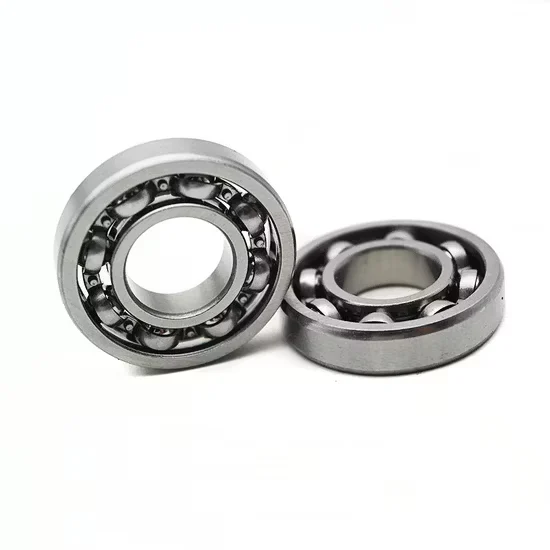
Deep Groove Ball Bearings
6204 Deep Groove Ball Bearing 20×47×14 mm
View Product
Deep Groove Ball Bearings
6003 Deep Groove Ball Bearing for Fan Equipment
View ProductKOYO stock in Greenville, factory orders for the rest
Common KOYO models ship from our North American warehouse; ultra-precision, custom and rare specifications are ordered direct from KOYO, with full export and customs documents.
Check Stock for Your Models- Stock orders dispatched
- 3 working days
- North America warehouse
- Greenville, SC
- Trade terms
- EXW · FOB · CIF · DAP
- Shipping
- Express · Air · Sea
Keep reading
Related KOYO bearing articles

Brands & Alternatives · · 7 min read
JTEKT Bearing Equivalents Cross-Reference Wholesale Supplier
Finding reliable JTEKT bearing equivalents requires more than matching basic dimensions, as ignoring internal clearance and dynamic load ratings causes catastrophic equipment failures. Verify…
Read the Article Brands & Alternatives · · 6 min read
JTEKT Bearing Switching Approval Workflow & Wholesale Supplier
Identical outer dimensions do not guarantee identical performance, making a strict approval workflow for switching bearing brands essential to prevent catastrophic equipment failure. Verify…
Read the Article Brands & Alternatives · · 7 min read
JTEKT & Timken Bearings Cross-Reference | Wholesale Supplier
A successful JTEKT Timken bearing cross-reference requires verifying internal clearances and cage materials, not just matching basic outer dimensions. Relying solely on dimensional matches…
Read the ArticleRequest a Quote
Send your KOYO model list for a consolidated quote
Part Number Company quotes KOYO bearings, seals, lubrication and tools in one proforma invoice, with multi-currency pricing and the documents your customs and QC teams need.
- JTEKT KOYO authorization letter
- KOYO original quality certificate
- Certificate of origin
- Customs, shipping documents and tracking