KOYO Bearing Insights Brands & Alternatives
JTEKT vs NKE: How to Validate Equivalent Bearing Claims Wholesale
- Published
- By Part Number Company, Part Number Company
- Authorized KOYO Distributor

Dimensional equivalence is a trap.
To validate equivalent bearing claims between JTEKT and NKE, you must verify material metallurgy certificates, inspect cage structural design for heavy-load integrity, and confirm application-specific operational clearance. Relying solely on outer dimensions invites premature failure.
The workshop floor in Vietnam was silent, but the smell of burnt oil told the whole story. A batch of tapered roller bearings, sourced as a direct cross-reference replacement, had disintegrated inside a high-torque gearbox. The supplier had sworn the parts were identical. The part numbers matched the catalog. The outer diameter, bore, and width were perfect to the micron. Yet, within months, the cage fragments had shredded the raceways, halting production and triggering a索赔 claim that dwarfed the initial savings. That incident shifted my focus from simple procurement to technical validation. It revealed a critical gap in how industrial buyers assess alternatives. Many assume that if two brands share the same ISO boundary dimensions, they are interchangeable. This assumption ignores the internal geometry, heat treatment processes, and steel purity that define actual service life.
Understanding the difference requires moving beyond the catalog. It demands a forensic approach to specification comparison. When evaluating a JTEKT to NKE transition, or any major brand substitution, the devil is not in the dimensions. It is in the details that do not appear on the basic dimension sheet.
Why Dimensional Equivalence Fails in Heavy-Duty Applications?
Internal geometry and material purity dictate real-world performance, not just outer dimensions.
A common misconception in MRO procurement is that bearings are commodity items defined by three numbers: bore, outside diameter, and width. While these define the fit, they do not define the function. Two bearings can fit the same housing yet behave entirely differently under load. The failure often stems from differences in internal contact angles, roller profiling, and the quality of the steel used.
Consider the dynamic load rating. This value indicates how much load a bearing can withstand for a million revolutions. If a substitute bearing has a lower dynamic load rating than the original, it will fatigue faster, even if it fits perfectly. In heavy-duty applications like mining crushers or steel mill reducers, this discrepancy leads to spalling and early seizure.
| Performance Factor | Original Specification Requirement | Generic Substitute Risk |
|---|---|---|
| Steel Purity | Controlled inclusion density | Uncontrolled impurities leading to stress risers |
| Heat Treatment | Uniform case depth and hardness | Inconsistent hardening causing micro-cracking |
| Internal Geometry | Optimized contact angle for load distribution | Standard angle causing edge loading |
| Surface Finish | Micron-level precision on raceways | Rougher finish increasing friction and heat |
The table above illustrates why a “perfect fit” can still be a failed solution. A generic substitute might meet the dimensional tolerances but fail in material consistency. For instance, the presence of non-metallic inclusions in the steel can act as initiation points for fatigue cracks. High-quality manufacturers use vacuum-degassed steel to minimize these inclusions. Without verifying the steel source and treatment process, buyers risk installing components with significantly reduced fatigue life.
When I review cross-brand proposals now, I look past the part number. I ask for the dynamic load rating data and the specific steel grade certification. If the supplier cannot provide this, the risk is too high. The cost of a bearing is negligible compared to the cost of downtime. A unit that fails prematurely does not just require replacement; it requires labor, logistics, and lost production revenue. Validating these internal specs is the first step in avoiding that trap.
How to Verify Material and Cage Integrity?
Demand mill certificates and inspect cage design to prevent fragmentation under heavy loads.
The cage is the skeleton of the bearing. It holds the rolling elements in place, ensuring they do not collide and maintaining proper spacing. In high-speed or high-vibration environments, the cage undergoes significant stress. The material and design of the cage are critical to survival.
Many failures I have investigated trace back to cage fragmentation. This occurs when the cage material is too brittle or the design lacks sufficient strength for the application. Steel cages are robust and suitable for heavy loads and high temperatures. Polymer cages, while lighter and capable of higher speeds, may degrade under extreme heat or chemical exposure.
To validate equivalent bearing claims, you must request the material certificate for the cage. Do not accept a verbal assurance. Ask for the mill certificate that specifies the alloy composition and heat treatment status. For steel cages, verify that the material meets the required toughness standards. For polymer cages, check the temperature rating and chemical resistance data.
In one case, a distributor offered a lower-cost alternative that used a stamped steel cage instead of the machined brass cage specified in the original design. The stamped cage lacked the rigidity needed for the heavy shock loads in a quarry crusher. Within weeks, the cage deformed, causing the rollers to skew and seize. The initial savings were erased by the cost of a new shaft and housing.
Verification involves more than just paperwork. It requires understanding the application. If the bearing operates in a high-temperature environment, ensure the cage material can withstand the heat without losing structural integrity. If the application involves high speeds, check that the cage design minimizes centrifugal forces.
When sourcing, insist on traceability. A reputable supplier will provide documentation linking the specific batch of bearings to its material certifications. This level of transparency is rare in the gray market but standard among professional distributors who prioritize long-term reliability over quick sales.
What Documentation Proves True Equivalence?
Traceability docs and dynamic load ratings are mandatory for risk-free substitution.
Paperwork is not just bureaucracy; it is insurance. In the world of industrial bearings, documentation proves that the product is genuine and meets the specified standards. Without it, you are buying a mystery box.
To validate equivalent bearing claims, you need three key documents:
- Certificate of Conformity (CoC): This document confirms that the bearings were manufactured according to the relevant ISO or ABMA standards. It should include the batch number and date of manufacture.
- Mill Certificate for Materials: This provides detailed information about the steel used in the rings and rolling elements, as well as the cage material. It verifies the chemical composition and mechanical properties.
- Dynamic Load Rating Data: This technical sheet confirms the bearing’s capacity to handle radial and axial loads. It allows engineers to calculate the expected service life based on the actual operating conditions.
A US buyer once shared how he avoided a costly mistake by demanding these documents. He was considering a switch to a cheaper brand for a large order of spherical roller bearings. The supplier hesitated to provide the mill certificates, claiming they were “proprietary.” This red flag prompted the buyer to stick with the original brand. Later, it was revealed that the cheaper brand had inconsistent quality control, with many units failing premature fatigue tests.
Traceability also helps in failure analysis. If a bearing fails, having the batch number allows you to trace it back to the production run. This can help identify if there was a systemic issue with that batch, such as a heat treatment error. Without this data, you are left guessing, which delays resolution and increases downtime.
Professional suppliers understand this need. They maintain rigorous documentation systems and are willing to share these records with serious buyers. This transparency builds trust and ensures that every component installed in your machinery is verified and reliable.
How to Source Verified Alternatives Globally?
Partner with suppliers who offer technical validation and mixed-brand consolidation.
Finding a reliable source for verified alternatives is challenging. The global bearing market is fragmented, with countless distributors offering varying levels of expertise. Some are mere box movers, while others provide technical support and validation services.
To mitigate risk, partner with suppliers who demonstrate technical competence. Look for those who offer cross-brand equivalent consultation. They should be able to explain why a specific alternative is suitable for your application, citing technical data rather than just price.
Mixed-brand consolidation is another valuable service. Instead of ordering from multiple sources, a competent supplier can consolidate various brands into a single shipment. This simplifies logistics, reduces shipping costs, and ensures consistent documentation standards across all items. For global buyers, this efficiency is crucial for managing inventory and reducing administrative overhead.
In my experience, the best suppliers are those who ask questions. They want to know the application, the load conditions, and the speed. They do not just sell a part number; they sell a solution. This approach minimizes the risk of mismatched specifications and ensures that the bearings perform as expected.
When evaluating potential partners, check their inventory depth. A supplier with a massive spot inventory can respond quickly to emergency breakdowns. This agility is vital for MRO operations where downtime is expensive. Additionally, verify their quality assurance processes. Do they inspect goods before shipment? Do they have a system for handling returns and failure analysis?
By choosing a partner who prioritizes technical validation and logistical efficiency, you transform bearing procurement from a transactional task into a strategic advantage. You gain access to genuine products, reliable documentation, and the peace of mind that comes from knowing your equipment is protected.
Conclusion
Validation prevents failure.
True equivalence goes beyond dimensions. It requires verifying material certs, cage design, and load ratings. Partner with suppliers who provide full traceability and technical support to ensure reliability and minimize downtime.
Target Industries
Industries and equipment where the KOYO products in this article are specified.
Written by the Part Number Company team
Part Number Company is an authorized KOYO distributor supplying JTEKT KOYO bearings, seals, lubrication, tools and condition monitoring parts from North American stock in Greenville, SC, plus KOYO factory orders for rare and custom specifications.
About Part Number Company and our KOYO authorizationProducts in this article
KOYO bearings mentioned above
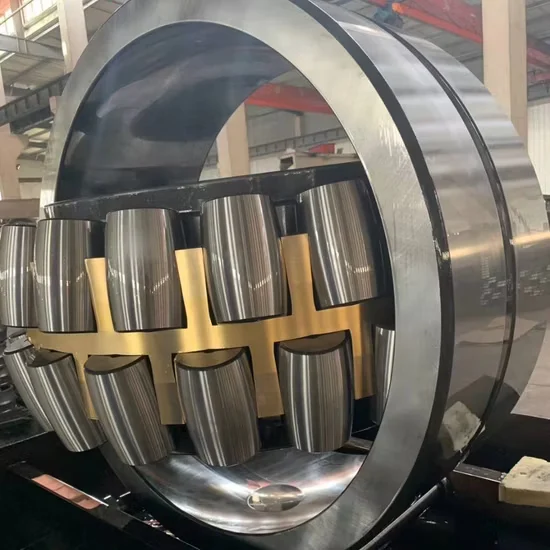
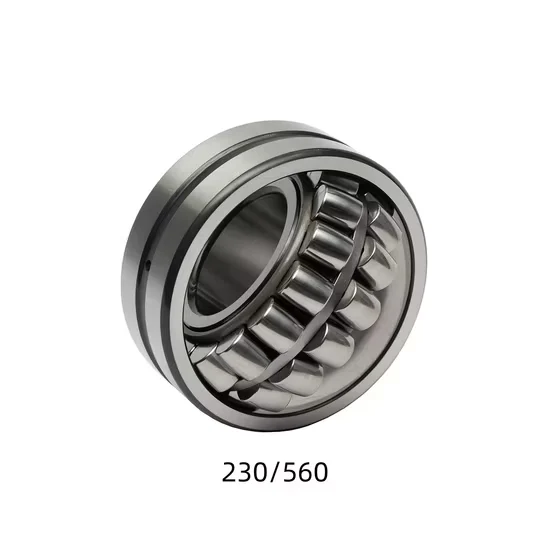
The KOYO models discussed here are available from Part Number Company, either from Greenville stock or by KOYO factory order.
KOYO stock in Greenville, factory orders for the rest
Common KOYO models ship from our North American warehouse; ultra-precision, custom and rare specifications are ordered direct from KOYO, with full export and customs documents.
Check Stock for Your Models- Stock orders dispatched
- 3 working days
- North America warehouse
- Greenville, SC
- Trade terms
- EXW · FOB · CIF · DAP
- Shipping
- Express · Air · Sea
Keep reading
Related KOYO bearing articles
Brands & Alternatives · · 7 min read
JTEKT Bearing Equivalents Cross-Reference Wholesale Supplier
Finding reliable JTEKT bearing equivalents requires more than matching basic dimensions, as ignoring internal clearance and dynamic load ratings causes catastrophic equipment failures. Verify…
Read the Article Brands & Alternatives · · 6 min read
JTEKT Bearing Switching Approval Workflow & Wholesale Supplier
Identical outer dimensions do not guarantee identical performance, making a strict approval workflow for switching bearing brands essential to prevent catastrophic equipment failure. Verify…
Read the Article
Brands & Alternatives · · 7 min read
JTEKT & Timken Bearings Cross-Reference | Wholesale Supplier
A successful JTEKT Timken bearing cross-reference requires verifying internal clearances and cage materials, not just matching basic outer dimensions. Relying solely on dimensional matches…
Read the ArticleRequest a Quote
Send your KOYO model list for a consolidated quote
Part Number Company quotes KOYO bearings, seals, lubrication and tools in one proforma invoice, with multi-currency pricing and the documents your customs and QC teams need.
- JTEKT KOYO authorization letter
- KOYO original quality certificate
- Certificate of origin
- Customs, shipping documents and tracking