KOYO Bearing Insights Brands & Alternatives
JTEKT & SKF Sealed Bearings Seal Drag Condition Checks Bulk Supplier
- Published
- By Part Number Company, Part Number Company
- Authorized KOYO Distributor
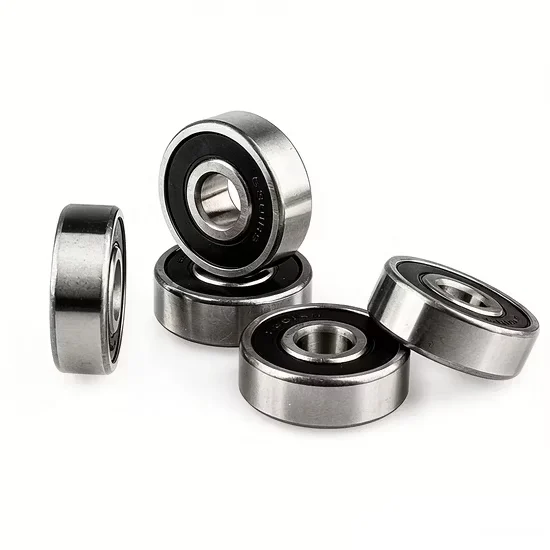
Tighter seals do not mean better protection.
Seal drag torque, not just physical dimensions, dictates bearing life in harsh operating conditions. Before replacing JTEKT or SKF units, operators must verify contact seal interference and friction moment limits to prevent lip overheating and premature grease degradation.
The humidity in Lagos clings to everything, including the rusted casings of ball mills I once serviced. A client had ordered a bulk replacement of sealed bearings, assuming that identical outer diameters meant a direct swap between brands. We installed the new units without checking the seal drag specifications. Within months, the equipment seized. The culprit was not load capacity or misalignment, but excessive friction from the contact seals. The heat generated by the tight seal lips baked the lubricant dry, turning the grease into a solid block that locked the rollers. That failure forced me to dismantle dozens of units, comparing the internal geometry of JTEKT and SKF designs side by side. I learned that blind replacement ignores the critical variable of seal drag torque.
Understanding these nuances is essential for any procurement strategy involving mixed-brand inventories. When sourcing from a JTEKT & SKF Sealed Bearings Seal Drag Condition Checks Bulk Supplier, technical validation must precede the purchase order.
Why Seal Drag Torque Matters More Than Dimensions?
Friction generates heat, and heat destroys lubrication. This is the fundamental physics that many maintenance teams overlook when focusing solely on dimensional tolerances. A bearing might fit perfectly into the housing, but if the seal drag torque exceeds the operational threshold, the internal temperature will rise rapidly. In heavy-duty applications like mining crushers or vibrating screens, this thermal buildup accelerates the oxidation of the grease. Once the oil separates from the thickener, the rolling elements run dry, leading to catastrophic spalling and cage failure.
The misconception that a tighter seal offers superior protection against dust and moisture is dangerous. While it may block contaminants, it also increases the starting torque and running friction. For high-speed applications, this extra resistance creates a feedback loop of heat generation. The seal material, often nitrile rubber or polyacrylate, has a specific temperature threshold. Exceeding this limit causes the lip to harden and lose its elasticity, creating gaps that allow ingress despite the initial tight fit.
In my experience, the difference in drag torque between brands can be significant even for bearings with identical ISO designations. JTEKT and SKF utilize different lip profiles and interference fits. One brand might prioritize low friction for energy efficiency, while another emphasizes maximum sealing for dirty environments. Without verifying the specific drag characteristics against the application’s RPM and load, a replacement can reduce bearing life by a substantial margin. This is why a knowledgeable JTEKT & SKF Sealed Bearings Seal Drag Condition Checks Bulk Supplier provides technical data sheets rather than just part numbers.
JTEKT vs SKF: Contact Seal Structure & Drag Comparison
Comparing these two major brands requires looking beyond the catalog dimensions. The structural differences in their contact seals directly influence the friction moment. JTEKT often employs specific lip geometries designed to balance sealing effectiveness with minimal torque loss. SKF, on the other hand, has developed various seal types, including standard contact seals and low-friction variants, each with distinct interference levels.
| Feature | JTEKT Contact Seals | SKF Contact Seals | Operational Impact |
|---|---|---|---|
| Lip Design Profile | Optimized for balanced interference | Varied profiles including low-friction options | Affects starting torque and breakaway force |
| Interference Fit | Standardized for general industrial use | Specific ranges for high-speed vs. heavy-load | Determines heat generation at given RPM |
| Friction Moment | Moderate, suitable for steady loads | Can be lower in specialized series | Influences energy consumption and temp rise |
| Material Composition | High-quality nitrile or fluorocarbon | Advanced polymer blends for durability | Impacts resistance to chemical and thermal degradation |
| Seal Seating Depth | Precise press-fit requirements | Specific installation depth guidelines | Critical for preventing dust ingress and lip damage |
A case from a vibrating screen operation illustrates this difference. The original equipment used bearings with a specific seal type that handled high-frequency vibrations well. When a batch was replaced with an alternative brand that had higher seal drag, the increased friction caused rapid wear on the seal lips. The vibration amplified the heat generation, leading to premature failure. Adjusting the speed limit and selecting a seal with lower drag torque resolved the issue. This highlights the need for precise matching when working with a JTEKT & SKF Sealed Bearings Seal Drag Condition Checks Bulk Supplier.
The matrix above shows that while both brands offer robust solutions, their approaches to seal design differ. Procurement teams must align these differences with the specific operating conditions of their machinery. Ignoring these nuances can lead to unexpected downtime and increased maintenance costs.
How to Check Operating Conditions Before Installation?
Before installing any sealed bearing, a thorough assessment of the operating environment is mandatory. This process involves measuring key parameters such as rotational speed, ambient temperature, and load direction. These factors determine whether the selected seal can withstand the operational stresses without generating excessive heat.
First, measure the rotational speed (RPM) of the shaft. Contact seals have a maximum speed limit, beyond which the friction becomes unmanageable. If the application operates near this limit, a low-friction seal variant is necessary. Next, assess the ambient temperature and potential for external heat sources. High ambient temperatures reduce the margin for error regarding friction-induced heating.
Load direction and magnitude also play a crucial role. Radial loads can cause shaft deflection, which may increase the pressure on one side of the seal lip. This uneven contact leads to localized heating and accelerated wear. In such cases, a seal with a more forgiving lip design or a non-contact shield might be preferable. Additionally, check for the presence of contaminants. While sealed bearings protect against dust and water, extreme conditions may require additional external protection or more frequent maintenance intervals.
A conveyor idler batch swap once failed due to improper seal seating. The installation team did not verify the press-fit depth, causing the seal to sit incorrectly. This allowed dust to ingress behind the lip, defeating the purpose of the seal. Correcting the installation procedure and ensuring proper seating depth increased the service life significantly. This example underscores the importance of procedural checks when sourcing from a JTEKT & SKF Sealed Bearings Seal Drag Condition Checks Bulk Supplier.
Recalibrating Drag Torque to Prevent Premature Failure
Optimizing drag torque involves adjusting the fit and lubrication to achieve a balance between sealing and friction. This recalibration process can extend bearing life and improve reliability. It starts with selecting the right grease. The viscosity and base oil type must match the operating temperature and speed. Greases with high dropping points and good mechanical stability are essential for high-friction environments.
Next, consider the fit between the bearing and the housing. A too-tight fit can distort the outer ring, altering the seal geometry and increasing drag. Conversely, a loose fit allows movement that can damage the seal lip. Ensuring the correct housing tolerance is critical for maintaining the intended seal performance.
In some cases, modifying the seal itself is an option. Trimming the lip or using a different seal material can reduce drag torque. However, this requires careful engineering judgment to avoid compromising sealing effectiveness. For critical applications, consulting with technical experts is advisable. They can provide specific recommendations based on the application’s unique requirements.
A ball mill bearing replacement project demonstrated the value of recalibration. After experiencing repeated failures due to grease drying, the team recalibrated the drag torque by selecting a lower-friction seal and optimizing the grease type. This adjustment reduced the operating temperature and extended the bearing life noticeably. Such proactive measures are key to maximizing the value provided by a JTEKT & SKF Sealed Bearings Seal Drag Condition Checks Bulk Supplier.
Conclusion
Seal drag torque is the silent killer of bearing life.
Ignoring the friction characteristics of contact seals leads to overheating, grease degradation, and premature failure. Validating operating conditions and understanding the structural differences between JTEKT and SKF seals are essential steps in any replacement strategy. By focusing on these technical details, operators can ensure reliable performance and minimize unplanned downtime.
Target Industries
Industries and equipment where the KOYO products in this article are specified.

Written by the Part Number Company team
Part Number Company is an authorized KOYO distributor supplying JTEKT KOYO bearings, seals, lubrication, tools and condition monitoring parts from North American stock in Greenville, SC, plus KOYO factory orders for rare and custom specifications.
About Part Number Company and our KOYO authorizationProducts in this article
KOYO bearings mentioned above
The KOYO models discussed here are available from Part Number Company, either from Greenville stock or by KOYO factory order.
Deep Groove Ball Bearings
6044 Deep Groove Ball Bearing for Mining Machinery
View Product
Deep Groove Ball Bearings
6230 Deep Groove Ball Bearing 150×270×45 mm for Mining Machinery
View Product
Deep Groove Ball Bearings
6013 Deep Groove Ball Bearing 65×100×18 mm for Mining Machinery
View Product
Spherical Roller Bearings
230/1000 Spherical Roller Bearing
View ProductKOYO stock in Greenville, factory orders for the rest
Common KOYO models ship from our North American warehouse; ultra-precision, custom and rare specifications are ordered direct from KOYO, with full export and customs documents.
Check Stock for Your Models- Stock orders dispatched
- 3 working days
- North America warehouse
- Greenville, SC
- Trade terms
- EXW · FOB · CIF · DAP
- Shipping
- Express · Air · Sea
Keep reading
Related KOYO bearing articles
Brands & Alternatives · · 7 min read
JTEKT Bearing Equivalents Cross-Reference Wholesale Supplier
Finding reliable JTEKT bearing equivalents requires more than matching basic dimensions, as ignoring internal clearance and dynamic load ratings causes catastrophic equipment failures. Verify…
Read the Article Brands & Alternatives · · 6 min read
JTEKT Bearing Switching Approval Workflow & Wholesale Supplier
Identical outer dimensions do not guarantee identical performance, making a strict approval workflow for switching bearing brands essential to prevent catastrophic equipment failure. Verify…
Read the Article
Brands & Alternatives · · 7 min read
JTEKT & Timken Bearings Cross-Reference | Wholesale Supplier
A successful JTEKT Timken bearing cross-reference requires verifying internal clearances and cage materials, not just matching basic outer dimensions. Relying solely on dimensional matches…
Read the ArticleRequest a Quote
Send your KOYO model list for a consolidated quote
Part Number Company quotes KOYO bearings, seals, lubrication and tools in one proforma invoice, with multi-currency pricing and the documents your customs and QC teams need.
- JTEKT KOYO authorization letter
- KOYO original quality certificate
- Certificate of origin
- Customs, shipping documents and tracking