KOYO Bearing Insights Buying Guide
JTEKT Bearing Purchasing Checklist – Wholesale Bearing Supplier
- Published
- By Part Number Company, Part Number Company
- Authorized KOYO Distributor

Matching the base part number is not enough to prevent failure.
A precise JTEKT bearing purchasing checklist focusing on suffixes, internal clearances, and cage materials prevents catastrophic failures in heavy-duty maintenance. Maintenance teams must verify these specific parameters against operating conditions rather than relying solely on the primary model number.
I still remember the email from a mine site manager in Monterrey. He had ordered what he thought were standard replacement bearings for a primary crusher. The part numbers matched the old inventory list perfectly. Yet, within days of installation, the bearings seized under high thermal load. The production line halted for weeks. The issue was not the brand or the basic dimensions. It was the omission of the C3 clearance suffix and the wrong cage material specification in the purchase order. That incident reshaped how I approach every procurement request. Buying industrial bearings is not a simple administrative task. It is a technical selection process where a single missing letter in the suffix can dictate whether equipment runs for years or fails in days. This guide details the critical parameters that define a robust JTEKT bearing purchasing checklist.
Why Base Part Numbers Fail in Maintenance?
Ignoring suffixes causes the majority of premature bearing failures in harsh environments.
The base part number identifies the bearing type, boundary dimensions, and basic design. It does not convey information about internal clearance, cage material, sealing type, or heat treatment. In heavy industry, these omitted details are often the difference between success and failure. A standard deep groove ball bearing might look identical to one designed for high temperatures, but their internal geometries differ significantly.
Consider a scenario involving a vibrating screen in a quarry. The maintenance team ordered replacements using only the base number. The original units used a pressed steel cage suited for high vibration and moderate speeds. The new shipment arrived with machined brass cages, which are excellent for high-speed applications but vulnerable to the intense oscillatory forces of a screen. The brass cages fractured under stress, leading to rapid bearing disintegration. This mismatch occurred because the suffix indicating cage material was overlooked during procurement.
| Parameter | Standard Specification | Heavy-Duty Requirement | Risk of Mismatch |
|---|---|---|---|
| Internal Clearance | CN (Normal) | C3 or C4 | Seizure due to thermal expansion |
| Cage Material | Machined Brass | Pressed Steel or Polyamide | Cage fracture under vibration |
| Sealing Type | Open or Shielded | Contact Seal (RS/2RS) | Contamination ingress and lubricant loss |
| Heat Treatment | Standard | Suffix for High Temp | Loss of hardness and dimensional stability |
When creating a JTEKT bearing purchasing checklist, always expand the part number to include all suffixes. Verify each suffix against the original equipment manufacturer’s specifications or the actual conditions of the application. If the original suffix is unknown, consult technical documentation or perform a physical inspection of the failed unit. Do not assume that a standard variant will suffice. Our cross-brand equivalent consultation service helps identify these critical suffixes when original documentation is missing, ensuring that the replacement matches the operational demands precisely.
How to Select the Right Internal Clearance?
Match C3 or C4 clearances to specific thermal expansion profiles to avoid seizure.
Internal clearance refers to the distance between the rolling elements and the raceways. Standard clearance (CN) is suitable for normal operating temperatures and typical fits. However, in applications involving significant heat generation or where the housing expands more than the shaft, standard clearance can disappear, leading to preload and eventual seizure.
In mining crushers, friction generates substantial heat. As the bearing heats up, the inner ring expands. If the initial clearance is insufficient, this expansion eliminates the running gap. The rolling elements then press against the raceways with excessive force, generating more heat and causing rapid failure. This is why C3 or even C4 clearance is often required for such applications. C3 clearance provides a larger internal gap than standard, accommodating thermal expansion without inducing preload.
Selecting the correct clearance requires understanding the thermal dynamics of the application. For instance, a conveyor pulley in a cement plant operates in a hot environment. Using a standard clearance bearing here would likely result in premature failure due to thermal growth. A JTEKT bearing purchasing checklist must specify the clearance class based on the expected operating temperature and the fit between the bearing and its housing.
It is a common misconception that tighter clearance is always better for precision. In reality, wrong clearance in high-temperature environments causes immediate seizure. Always verify the thermal conditions before finalizing the clearance specification. If unsure, opt for C3 clearance as a safer baseline for heavy-duty applications, unless the manufacturer specifies otherwise. Technical support can assist in calculating the required clearance based on shaft and housing materials, operating temperatures, and speed factors.
Which Cage Material Suits Your Vibration Levels?
Compare machined brass, pressed steel, and polyamide cages for specific load and vibration conditions.
The cage retains the rolling elements and guides them during rotation. Different materials offer distinct advantages depending on the application. Machined brass cages are durable and suitable for high-speed applications with moderate loads. They provide good guidance and low friction. However, they are relatively heavy and can be susceptible to fracture under high vibration or shock loads.
Pressed steel cages are lighter and more resilient to vibration. They are commonly used in spherical roller bearings for applications like vibrating screens and crushers. Their robust construction withstands the oscillatory forces that would damage brass cages. Polyamide cages, often reinforced with glass fiber, offer excellent weight reduction and good chemical resistance. They are suitable for applications requiring low noise and moderate temperatures.
| Cage Material | Strengths | Weaknesses | Ideal Application |
|---|---|---|---|
| Machined Brass | High speed, good guidance | Heavy, vulnerable to vibration | Electric motors, gearboxes |
| Pressed Steel | Lightweight, vibration resistant | Limited speed capability | Vibrating screens, crushers |
| Polyamide (PA66) | Low weight, chemical resistant | Temperature limited | Fans, pumps, general machinery |
A case from a steel mill illustrates the importance of cage selection. The facility experienced frequent failures in fan bearings. The original units used brass cages. Upon analysis, it was determined that the vibration levels exceeded the capacity of the brass cages. Switching to pressed steel cages resolved the issue, extending bearing life significantly. This change was captured in their updated JTEKT bearing purchasing checklist, ensuring future orders specified the correct cage material.
When specifying cage material, consider the vibration profile, speed, and operating temperature. For high-vibration environments, prioritize pressed steel. For high-speed, low-vibration applications, machined brass may be preferable. Polyamide offers a balanced solution for general-purpose use but requires attention to temperature limits. Our technical team can review your application parameters to recommend the most suitable cage material, preventing mismatches that lead to premature failure.
What Sealing Options Prevent Contamination?
Evaluate contact seals versus shields based on debris exposure and rotational speed.
Contamination is a leading cause of bearing failure. Dust, dirt, and moisture can enter the bearing interior, damaging raceways and rolling elements. Seals and shields protect the bearing from these contaminants. Shields are non-contact metal plates that provide basic protection against larger particles. They allow for higher speeds and generate less heat but do not prevent fine dust or moisture ingress.
Contact seals, typically made of rubber, provide superior protection against fine contaminants and moisture. They create a barrier that keeps lubricant in and contaminants out. However, contact seals generate friction and heat, limiting their suitability for high-speed applications. In harsh environments like mining or agriculture, contact seals are often essential for bearing survival.
A conveyor system in a coal handling plant suffered from frequent bearing failures due to coal dust ingress. The original bearings used shields, which were insufficient for the fine particulate matter. Switching to bearings with contact seals dramatically reduced contamination-related failures. This lesson was incorporated into their procurement protocol, mandating sealed bearings for all exposed conveyor pulleys.
When developing a JTEKT bearing purchasing checklist, assess the level of contamination risk. For clean, high-speed environments, shields may suffice. For dirty, wet, or dusty conditions, contact seals are necessary. Consider the trade-off between protection and speed. In some cases, hybrid solutions or specialized seal designs may be required. Our inventory includes a wide range of sealed and shielded options, allowing for precise matching to environmental conditions. Traceability documentation ensures that the seals meet the specified material and design standards, providing confidence in their performance.
Conclusion
Precision in suffixes, clearance, and cage selection defines bearing reliability.
A comprehensive JTEKT bearing purchasing checklist moves beyond base part numbers to address the specific demands of heavy-duty applications. By verifying internal clearance, cage material, and sealing options, maintenance teams can prevent costly downtime and extend equipment life. These technical details are not optional extras but fundamental requirements for reliable operation in harsh environments.
Target Industries
Industries and equipment where the KOYO products in this article are specified.

Written by the Part Number Company team
Part Number Company is an authorized KOYO distributor supplying JTEKT KOYO bearings, seals, lubrication, tools and condition monitoring parts from North American stock in Greenville, SC, plus KOYO factory orders for rare and custom specifications.
About Part Number Company and our KOYO authorizationProducts in this article
KOYO bearings mentioned above
The KOYO models discussed here are available from Part Number Company, either from Greenville stock or by KOYO factory order.
Deep Groove Ball Bearings
6203 Deep Groove Ball Bearing for Electric Motors
View Product
Deep Groove Ball Bearings
6006/6206/6306/6406 Deep Groove Ball Bearing
View Product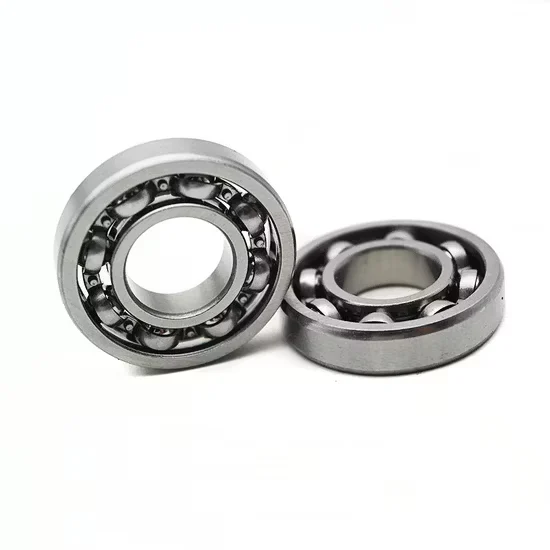
Deep Groove Ball Bearings
6204 Deep Groove Ball Bearing 20×47×14 mm
View Product
Deep Groove Ball Bearings
6003 Deep Groove Ball Bearing for Fan Equipment
View ProductKOYO stock in Greenville, factory orders for the rest
Common KOYO models ship from our North American warehouse; ultra-precision, custom and rare specifications are ordered direct from KOYO, with full export and customs documents.
Check Stock for Your Models- Stock orders dispatched
- 3 working days
- North America warehouse
- Greenville, SC
- Trade terms
- EXW · FOB · CIF · DAP
- Shipping
- Express · Air · Sea
Keep reading
Related KOYO bearing articles
Buying Guide · · 7 min read
JTEKT Bearing Technical Procurement Checklist for Wholesale Supplier
Prevent catastrophic equipment downtime by using a rigorous JTEKT bearing procurement checklist to verify critical suffixes, internal clearances, and cage materials. Standard model numbers…
Read the Article Buying Guide · · 7 min read
JTEKT Bearing for Vertical Rotating Assemblies | Wholesale Supplier
Proper JTEKT bearing selection vertical rotating assemblies requires prioritizing axial load capacity over standard radial specs to prevent premature cage failure. Discover how to…
Read the Article
Buying Guide · · 7 min read
JTEKT Replacement Bearings Cross-Reference Wholesale Supplier
Finding a JTEKT replacement bearings cross reference without OEM drawings requires more than matching basic dimensions to prevent catastrophic equipment failure. Accurate substitution demands…
Read the ArticleRequest a Quote
Send your KOYO model list for a consolidated quote
Part Number Company quotes KOYO bearings, seals, lubrication and tools in one proforma invoice, with multi-currency pricing and the documents your customs and QC teams need.
- JTEKT KOYO authorization letter
- KOYO original quality certificate
- Certificate of origin
- Customs, shipping documents and tracking