KOYO Bearing Insights Buying Guide
JTEKT Bearing for Vertical Rotating Assemblies | Wholesale Supplier
- Published
- By Part Number Company, Part Number Company
- Authorized KOYO Distributor

Radial load ratings are irrelevant if the axial thrust destroys the cage.
Selecting a JTEKT bearing for vertical rotating assemblies requires prioritizing axial load capacity and thermal clearance matching over standard radial specifications. Deep groove ball bearings often fail in vertical mounts because they cannot manage the combined weight of the rotor and dynamic hydraulic thrust. The correct approach involves using paired angular contact bearings or dedicated thrust units with C3 or C4 internal clearance to accommodate shaft elongation during operation.
The smell of burnt lubricant in a pump house is distinct. It signals that a bearing has seized, usually because the designer treated a vertical shaft like a horizontal one. In a horizontal setup, gravity acts perpendicular to the shaft axis, and radial bearings handle the load efficiently. In a vertical assembly, gravity acts parallel to the shaft. This shifts the primary stress from the raceways to the rolling elements and cages in a way that standard catalogs do not always highlight.
I learned this the hard way at a desalination plant near Riyadh. The maintenance team had installed standard JTEKT deep groove ball bearings in a large vertical circulation pump. They assumed the radial load rating was sufficient since the impeller was balanced. Within months, the bearings failed. The issue was not radial fatigue but axial overload. The weight of the motor rotor and the hydraulic thrust from the impeller created an unmanaged axial force that crushed the cage. Switching to a configuration that specifically addressed axial displacement solved the problem.
This experience dictates how I evaluate specifications today. When sourcing a JTEKT bearing for vertical rotating assemblies, the first question is never about radial capacity. It is about how the assembly handles thrust and heat.
Why Do Standard JTEKT Bearings Fail in Vertical Assemblies?
Vertical mounting changes the failure mechanism from surface fatigue to axial overload and cage burnout.
In horizontal applications, the load zone rotates around the bearing circumference. This distributes stress evenly. In vertical applications, the load is constant and directional. If the bearing type is not selected to handle this static axial component, the rolling elements skid rather than roll. This skidding generates excessive heat, which degrades the lubricant and leads to rapid cage failure.
Many engineers default to deep groove ball bearings because they are versatile and cost-effective. However, their axial load capacity is limited. A general rule is that a deep groove ball bearing can handle an axial load up to a certain percentage of its unused radial capacity. In vertical pumps, the axial load often exceeds this limit due to the weight of the shaft and impeller.
Consider a case involving a vertical mixer gearbox. The initial design used single-row deep groove bearings. The misalignment inherent in the long vertical shaft amplified the axial loads. The bearings experienced premature wear because they could not self-align to accommodate the shaft deflection. Replacing them with self-aligning variants or a combination that allows for slight misalignment extended the service life significantly.
The key takeaway is that vertical assemblies require bearings that can either support high axial loads directly or allow for the axial movement caused by thermal expansion without generating destructive internal stresses. Ignoring this distinction leads to repeated failures and increased downtime.
How to Calculate Axial Loads for Vertical Shafts?
Accurate quantification of rotor weight and dynamic hydraulic thrust is mandatory before selecting thrust or angular contact bearings.
Calculating the axial load for a vertical shaft is more complex than simply weighing the rotor. The total axial load consists of two main components: the static weight of the rotating parts and the dynamic hydraulic thrust generated by the impeller or fan.
The static load is straightforward. It is the sum of the weights of the shaft, impeller, coupling, and any other rotating components. This load is constant and always acts in the downward direction.
The dynamic hydraulic thrust is variable. It depends on the flow rate, head, and impeller design. In some operating conditions, such as startup or shutdown, the thrust can reverse direction. This reversal can be dangerous if the bearing arrangement is not designed to handle bidirectional axial loads. For example, a single-direction thrust bearing will fail if subjected to reverse thrust during a transient event.
To determine the required bearing capacity, engineers must add the static weight to the maximum expected dynamic thrust. A safety factor is then applied to account for unexpected shocks or vibrations. This total axial load determines whether a deep groove bearing is sufficient or if a more robust solution like an angular contact pair or a thrust roller bearing is needed.
When evaluating a JTEKT bearing for vertical rotating assemblies, ensure that the selected model’s axial load rating exceeds the calculated total axial load. Do not rely on radial load ratings for this purpose. The axial capacity is a separate specification that must be verified independently.
Which JTEKT Bearing Types Suit Specific Vertical Loads?
Deep groove bearings handle light thrust, while paired angular contacts or thrust rollers are mandatory for heavy axial loads.
Selecting the right bearing type depends on the magnitude and direction of the axial load. Below is a comparison of common bearing types used in vertical assemblies.
| Bearing Type | Axial Load Capacity | Misalignment Tolerance | Typical Application |
|---|---|---|---|
| Deep Groove Ball | Light to Moderate | Low | Small vertical motors, fans |
| Angular Contact Ball (Paired) | High | Low | Pumps, gearboxes with high thrust |
| Spherical Roller | Moderate to High | High | Heavy-duty mixers, crushers |
| Thrust Roller | Very High | None | Large vertical turbines, heavy pumps |
Deep groove ball bearings are suitable for small vertical motors where the axial load is minimal. They are simple and inexpensive but offer limited axial capacity. If the axial load increases, these bearings will fail prematurely.
For higher axial loads, paired angular contact ball bearings are a common choice. They can be arranged in back-to-back, face-to-face, or tandem configurations to handle different load directions and stiffness requirements. Back-to-back arrangements are often preferred for vertical shafts because they provide rigidity against moment loads.
In cases where misalignment is a concern, such as in long vertical shafts or structures prone to vibration, spherical roller bearings are ideal. Their self-aligning capability compensates for shaft deflection and housing errors, reducing edge loading and extending life.
For extremely heavy axial loads, such as in large vertical hydro-turbines, thrust roller bearings are necessary. These bearings are designed specifically to support high axial forces and cannot handle radial loads. Therefore, they are often used in combination with a radial bearing to support the shaft.
When sourcing a JTEKT bearing for vertical rotating assemblies, consider the specific load profile of your application. Do not default to a single type. Use the table above as a starting point and consult technical datasheets for precise load ratings. Our inventory includes a wide range of these types, allowing for cross-brand equivalent consultation to find the exact model needed for your vertical setup.
How Does Thermal Expansion Affect Vertical Bearing Clearance?
Vertical shafts elongate under heat; selecting C3 or C4 clearance prevents axial lock-up during operation.
Thermal expansion is a critical factor in vertical assemblies. As the shaft heats up during operation, it expands longitudinally. In a horizontal setup, this expansion is often accommodated by floating one of the bearings. In a vertical setup, the weight of the rotor keeps the shaft in tension or compression, depending on the arrangement. If the bearings are too tight, the thermal expansion can cause the inner and outer rings to lock up axially.
This lock-up generates immense internal axial forces, even if no external thrust is applied. The result is rapid overheating and seizure. To prevent this, engineers must select bearings with greater internal clearance. Standard clearance (C0 or CN) is often insufficient for vertical applications with significant temperature rises.
C3 or C4 clearance classes are typically recommended. These classes provide extra space between the rolling elements and raceways, allowing the shaft to expand without inducing harmful stresses. The choice between C3 and C4 depends on the expected temperature differential between installation and operation.
It is also important to consider the fit between the bearing and the housing. A loose fit can allow the bearing to creep, while a tight fit can restrict expansion. Proper housing design and tolerance selection are essential to complement the bearing clearance choice.
When specifying a JTEKT bearing for vertical rotating assemblies, always check the operating temperature range. If the temperature rise is significant, insist on C3 or C4 clearance. This simple adjustment can prevent catastrophic failures and extend the maintenance interval.
Conclusion
Vertical shafts demand axial competence, not just radial strength.
Standard radial bearings often fail in vertical assemblies due to unmanaged axial loads and thermal expansion. Success requires selecting bearings with adequate axial capacity, such as angular contact or thrust units, and specifying appropriate internal clearance like C3 or C4 to accommodate shaft elongation. Always calculate the total axial load, including static weight and dynamic thrust, before making a selection.
Target Industries
Industries and equipment where the KOYO products in this article are specified.

Written by the Part Number Company team
Part Number Company is an authorized KOYO distributor supplying JTEKT KOYO bearings, seals, lubrication, tools and condition monitoring parts from North American stock in Greenville, SC, plus KOYO factory orders for rare and custom specifications.
About Part Number Company and our KOYO authorizationProducts in this article
KOYO bearings mentioned above
The KOYO models discussed here are available from Part Number Company, either from Greenville stock or by KOYO factory order.
Deep Groove Ball Bearings
6203 Deep Groove Ball Bearing for Electric Motors
View Product
Deep Groove Ball Bearings
6006/6206/6306/6406 Deep Groove Ball Bearing
View Product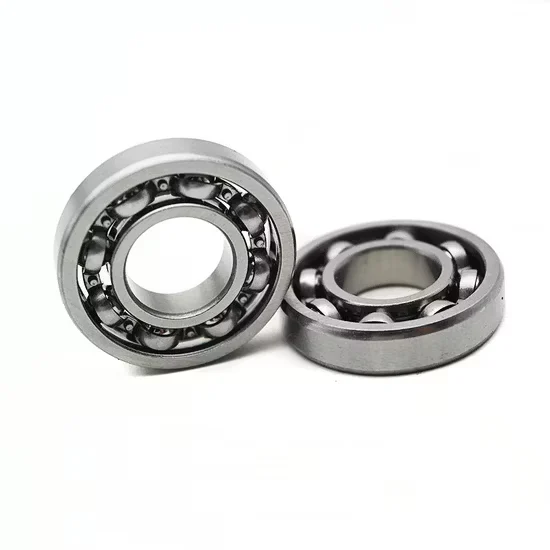
Deep Groove Ball Bearings
6204 Deep Groove Ball Bearing 20×47×14 mm
View Product
Deep Groove Ball Bearings
6003 Deep Groove Ball Bearing for Fan Equipment
View ProductKOYO stock in Greenville, factory orders for the rest
Common KOYO models ship from our North American warehouse; ultra-precision, custom and rare specifications are ordered direct from KOYO, with full export and customs documents.
Check Stock for Your Models- Stock orders dispatched
- 3 working days
- North America warehouse
- Greenville, SC
- Trade terms
- EXW · FOB · CIF · DAP
- Shipping
- Express · Air · Sea
Keep reading
Related KOYO bearing articles
Buying Guide · · 7 min read
JTEKT Bearing Technical Procurement Checklist for Wholesale Supplier
Prevent catastrophic equipment downtime by using a rigorous JTEKT bearing procurement checklist to verify critical suffixes, internal clearances, and cage materials. Standard model numbers…
Read the Article
Buying Guide · · 7 min read
JTEKT Replacement Bearings Cross-Reference Wholesale Supplier
Finding a JTEKT replacement bearings cross reference without OEM drawings requires more than matching basic dimensions to prevent catastrophic equipment failure. Accurate substitution demands…
Read the Article Buying Guide · · 9 min read
JTEKT Bearings for Repeated Impact & Shock Conditions Bulk Supplier
Selecting JTEKT bearings for impact and shock requires matching cage materials and clearances to actual shock intensity, as standard configurations often suffer premature cage…
Read the ArticleRequest a Quote
Send your KOYO model list for a consolidated quote
Part Number Company quotes KOYO bearings, seals, lubrication and tools in one proforma invoice, with multi-currency pricing and the documents your customs and QC teams need.
- JTEKT KOYO authorization letter
- KOYO original quality certificate
- Certificate of origin
- Customs, shipping documents and tracking