KOYO Bearing Insights Applications & Industries
Wholesale Supplier of JTEKT Bearings for Marine Corrosion Exposure
- Published
- By Part Number Company, Part Number Company
- Authorized KOYO Distributor

Stainless steel housings do not save standard bearings from salt-induced failure.
Selecting the right components for offshore and port environments requires prioritizing specialized sealing systems, protective surface treatments, and marine-grade lubrication protocols over basic material composition. A Wholesale Supplier of JTEKT Bearings for Marine Corrosion Exposure must provide units that integrate fluorocarbon elastomer seals and water-resistant grease formulations to withstand high-salinity atmospheric conditions and direct washdowns.
The humid, saline air at Jebel Ali Port does not forgive compromise. I once inspected a port crane spherical roller assembly that had seized after less than a year of operation, despite the housing being painted with heavy-duty anti-corrosion coating. The failure was not in the steel raceway but in the standard nitrile rubber seals, which had hardened and cracked under the combined stress of UV exposure and salt spray. This allowed moisture to ingress, washing out the conventional lithium-based grease and leading to rapid rusting of the rolling elements. That incident shifted my focus from merely matching part numbers to verifying the specific environmental protections built into the bearing unit. In marine applications, the difference between a component that lasts and one that fails prematurely often lies in these invisible details rather than the visible metal structure.
Understanding why standard configurations fail is the first step toward specifying the correct upgrades. The following sections detail the technical criteria for selecting bearings that survive in harsh maritime zones.
Why Do Standard JTEKT Bearings Fail in Marine Environments?
High humidity and salt spray rapidly degrade standard seals and wash out conventional greases.
Standard industrial bearings are designed for controlled factory environments where temperature and contamination levels are manageable. When deployed in marine settings, such as on deck machinery or offshore platforms, they face constant exposure to chloride ions. These ions accelerate electrochemical corrosion, leading to pitting on raceways and rolling elements even if the bearing steel itself is of high purity.
The primary point of failure is rarely the bearing steel itself but the interface between the rotating and stationary components. Standard nitrile (NBR) seals, while cost-effective for general use, lose elasticity and crack when exposed to ozone and salt-laden air over time. Once the seal integrity is compromised, seawater or saline mist enters the internal cavity. Conventional greases, which are often not formulated for high water resistance, emulsify and wash away, leaving the metal surfaces unprotected. This results in fretting corrosion and eventual seizure.
In one case involving a European vessel operator, deck winches experienced repeated failures due to grease washout during routine high-pressure cleaning. The standard grease used had low adhesion properties, leading to complete loss of lubrication film within weeks. Switching to a bearing unit with enhanced sealing and a polyurea-based marine grease resolved the issue, extending the maintenance interval significantly. This highlights that the bearing system must be viewed as an integrated unit of seal, lubricant, and steel, not just a mechanical component.
How to Choose the Right JTEKT Bearing Series for Offshore Use?
Match specific JTEKT/KOYO series with enhanced shielding to the exact load and exposure level.
Not all bearings are created equal for marine duty. Selecting the appropriate series involves evaluating the severity of the environment. For moderate exposure, such as indoor port warehouses, standard shields may suffice. However, for direct offshore exposure, bearings with robust contact seals are mandatory. JTEKT offers various configurations, including those with double rubber seals (2RS) or metal shields with additional labyrinth designs, which provide better protection against particulate and liquid ingress.
When consulting a Wholesale Supplier of JTEKT Bearings for Marine Corrosion Exposure, it is crucial to specify the operational context. Spherical roller bearings, commonly used in heavy-duty marine applications like crane booms and propeller shafts, require particular attention to their cage design and seal fit. The cage material should resist corrosion, and the seal lip geometry must maintain contact pressure without generating excessive heat.
| Feature | Standard Industrial Configuration | Marine-Enhanced Configuration |
|---|---|---|
| Seal Material | Nitrile Rubber (NBR) | Fluorocarbon Elastomer (FKM/Viton) |
| Grease Type | Lithium Complex | Polyurea or Calcium Sulfonate (Water-Resistant) |
| Surface Treatment | Basic Oil Coating | Zinc Flake or Dacromet Coating |
| Corrosion Resistance | Low | High |
| Suitability | Indoor, Dry Environments | Offshore, Deck, High-Salt Zones |
This comparison illustrates that upgrading specific components yields disproportionate benefits in longevity. For instance, FKM seals offer superior resistance to chemical degradation and temperature extremes compared to NBR. Additionally, surface treatments on the outer ring can prevent crevice corrosion between the bearing and the housing, a common issue in welded marine structures.
What Sealing and Lubrication Upgrades Are Mandatory?
Upgrading to FKM seals and water-resistant marine grease is non-negotiable for saltwater exposure.
Sealing is the first line of defense. In marine environments, the seal must act as a barrier against both liquid water and fine salt particles. Fluorocarbon elastomers (FKM), often known by trade names like Viton, provide excellent chemical resistance and maintain flexibility over a wide temperature range. They are less prone to hardening and cracking than standard rubbers, ensuring long-term integrity.
Lubrication is equally critical. The grease must have high water resistance, meaning it does not easily wash out or emulsify upon contact with water. NLGI consistency grades suitable for marine use often involve thickeners like polyurea or calcium sulfonate, which offer superior adhesion and water displacement properties. Standard lithium greases may perform adequately in dry conditions but fail quickly when subjected to spray or immersion.
A Middle East steel mill operating near the coast reported significant reductions in unplanned downtime after switching to bearings pre-filled with marine-grade grease. The previous setup suffered from frequent re-lubrication needs and premature wear due to grease washout. The new configuration maintained lubrication film integrity even during heavy rain and salt spray events. This demonstrates that the right lubricant can extend service life meaningfully, reducing the total cost of ownership despite higher initial procurement costs.
How to Verify Bearing Authenticity and Marine Specs Before Purchase?
Request traceability docs and specific marine-grade certifications from global suppliers to avoid counterfeit failures.
The market for industrial bearings is fraught with counterfeits, which pose severe risks in critical marine applications. Counterfeit bearings often use inferior steel and lack proper heat treatment, leading to early fatigue failure. Moreover, they may claim to have marine-specific features like special coatings or seals that are actually standard commercial grade. Verifying authenticity is therefore a critical step in the procurement process.
When engaging a Wholesale Supplier of JTEKT Bearings for Marine Corrosion Exposure, buyers should demand full traceability documentation. This includes material certificates, heat treatment records, and proof of origin from the manufacturer. Reputable suppliers will provide these documents without hesitation. Additionally, checking for compliance with international standards such as ISO 15243 for failure analysis can help in diagnosing issues if they arise.
Another layer of verification involves physical inspection. Genuine JTEKT bearings exhibit precise machining, consistent marking, and high-quality packaging. Counterfeits often show signs of poor finishing, inconsistent font styles in markings, or subpar packaging materials. For large orders, requesting samples for independent testing or third-party inspection can provide additional assurance. This diligence ensures that the bearings delivered meet the stringent requirements of marine operations, preventing costly failures and safety hazards.
Conclusion
Marine reliability depends on integrated sealing and lubrication strategies, not just steel quality.
Selecting bearings for marine environments demands a holistic approach that prioritizes protection against salt and moisture. By choosing units with FKM seals, water-resistant greases, and verified authenticity, operators can significantly reduce downtime and maintenance costs. A knowledgeable Wholesale Supplier of JTEKT Bearings for Marine Corrosion Exposure provides not just parts, but the technical assurance needed for harsh offshore conditions.
Target Industries
Industries and equipment where the KOYO products in this article are specified.
Written by the Part Number Company team
Part Number Company is an authorized KOYO distributor supplying JTEKT KOYO bearings, seals, lubrication, tools and condition monitoring parts from North American stock in Greenville, SC, plus KOYO factory orders for rare and custom specifications.
About Part Number Company and our KOYO authorizationProducts in this article
KOYO bearings mentioned above
The KOYO models discussed here are available from Part Number Company, either from Greenville stock or by KOYO factory order.
Marine Bearings
Corrosion-Resistant Spherical Plain Bearing Gez50-65 - Heavy-Duty Lubricated Steel/Steel, in Stock for Marine & Offshore
View Product
Spherical Roller Bearings
230/1000 Spherical Roller Bearing
View Product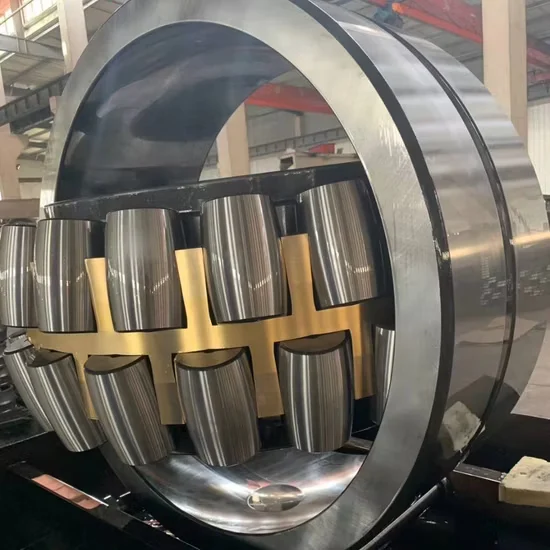
Spherical Roller Bearings
231/1000 Spherical Roller Bearing
View Product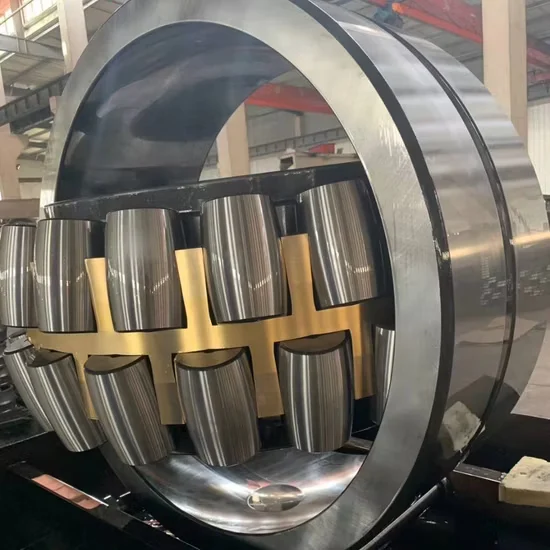
Spherical Roller Bearings
240/1000 Spherical Roller Bearing
View ProductKOYO stock in Greenville, factory orders for the rest
Common KOYO models ship from our North American warehouse; ultra-precision, custom and rare specifications are ordered direct from KOYO, with full export and customs documents.
Check Stock for Your Models- Stock orders dispatched
- 3 working days
- North America warehouse
- Greenville, SC
- Trade terms
- EXW · FOB · CIF · DAP
- Shipping
- Express · Air · Sea
Keep reading
Related KOYO bearing articles
Applications & Industries · · 7 min read
JTEKT Bearing Supplier for Compressor Drives and Rotors
Proper JTEKT bearing compressor selection requires matching internal clearances to actual site temperatures and loads to prevent thermal seizure in extreme environments. Standard clearances…
Read the Article
Applications & Industries · · 8 min read
JTEKT Bearings in Harvesters: Seasonal Duty Bulk Sale
JTEKT bearings harvesters prevent costly seasonal downtime by overcoming the high cyclic loads and fine crop debris that quickly overwhelm standard agricultural seals. Discover…
Read the Article
Applications & Industries · · 6 min read
Wholesale JTEKT Bearings for Vibratory Screens Oscillating Loads
Standard bearings frequently fail under high-frequency oscillation, causing costly downtime in mining operations. JTEKT bearings vibratory screens oscillating loads overcome this through self-aligning designs…
Read the ArticleRequest a Quote
Send your KOYO model list for a consolidated quote
Part Number Company quotes KOYO bearings, seals, lubrication and tools in one proforma invoice, with multi-currency pricing and the documents your customs and QC teams need.
- JTEKT KOYO authorization letter
- KOYO original quality certificate
- Certificate of origin
- Customs, shipping documents and tracking