KOYO Bearing Insights Installation & Maintenance
Pre-Installation Inspection of Long-Stored JTEKT Bearings Wholesale
- Published
- By Part Number Company, Part Number Company
- Authorized KOYO Distributor

Sealed does not mean safe.
Pre-installation inspection of long-stored JTEKT bearings is mandatory to prevent hidden failures caused by grease degradation and micro-spalling. Critical checks include visual assessment of retainers, rotational torque testing, internal clearance measurement against ISO standards, and verification of traceability documentation before any unit enters service.
The smell of a warehouse tells you more than the invoice. I remember standing in a dusty storage facility in Qingdao, overseeing a batch of JTEKT tapered roller bearings that had sat on shelves for three years. The boxes looked pristine. The seals were unbroken. To the naked eye, they were perfect. We skipped the pre-checks to meet a tight assembly deadline for an agricultural machinery client. Two weeks later, the entire production line halted. The bearings had seized. Upon disassembly, we found the grease had dried into a hard, waxy residue, and the rolling elements showed signs of micro-spalling. The cost of that downtime far exceeded the price of the bearings themselves. That incident shifted my perspective entirely. Now, every time I handle inventory, I look past the packaging. I check the keepers, measure the play, and verify the paper trail. Pre-Installation Inspection of Long-Stored JTEKT Bearings Wholesale is not just a technical formality; it is the only way to ensure that stored assets do not become operational liabilities.
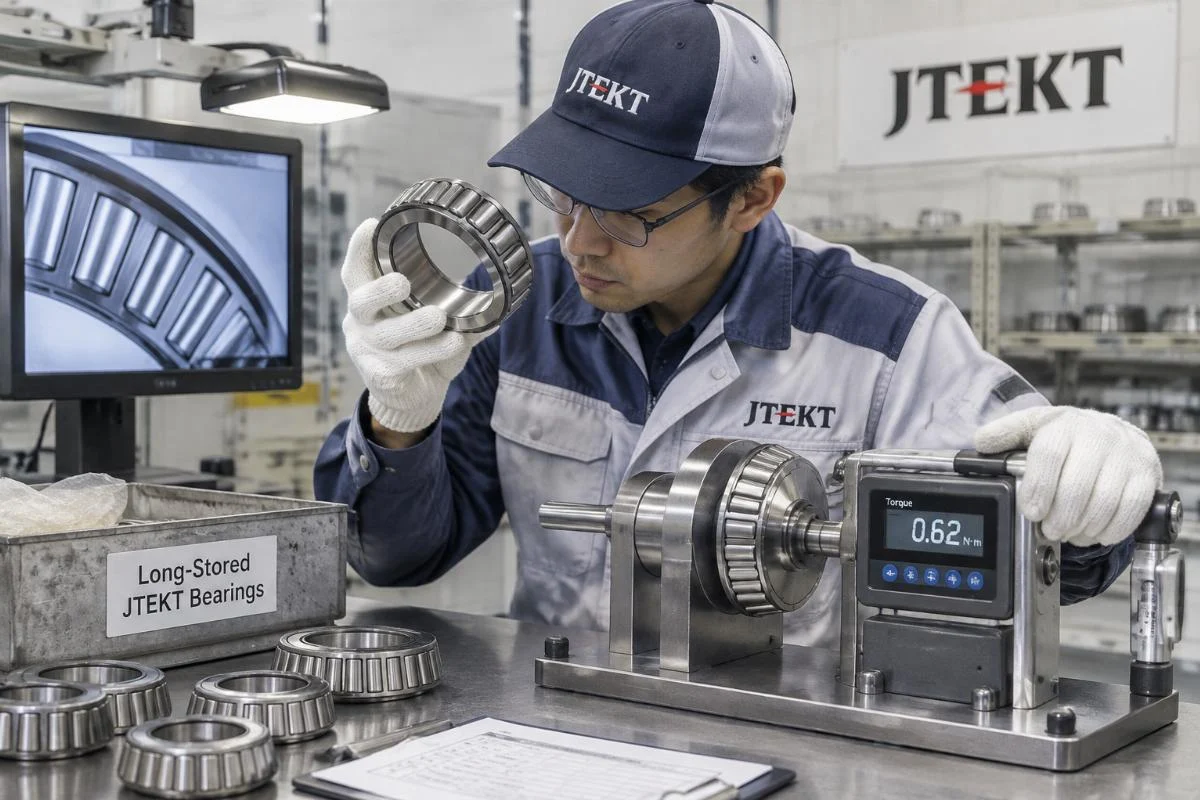
Storage is not a passive state. It is an active environment where chemistry and physics work against mechanical integrity. Understanding why these components fail while sitting still is the first step in preventing catastrophic equipment failure.
Why Do Long-Stored JTEKT Bearings Fail?
Silent degradation occurs even in sealed units.
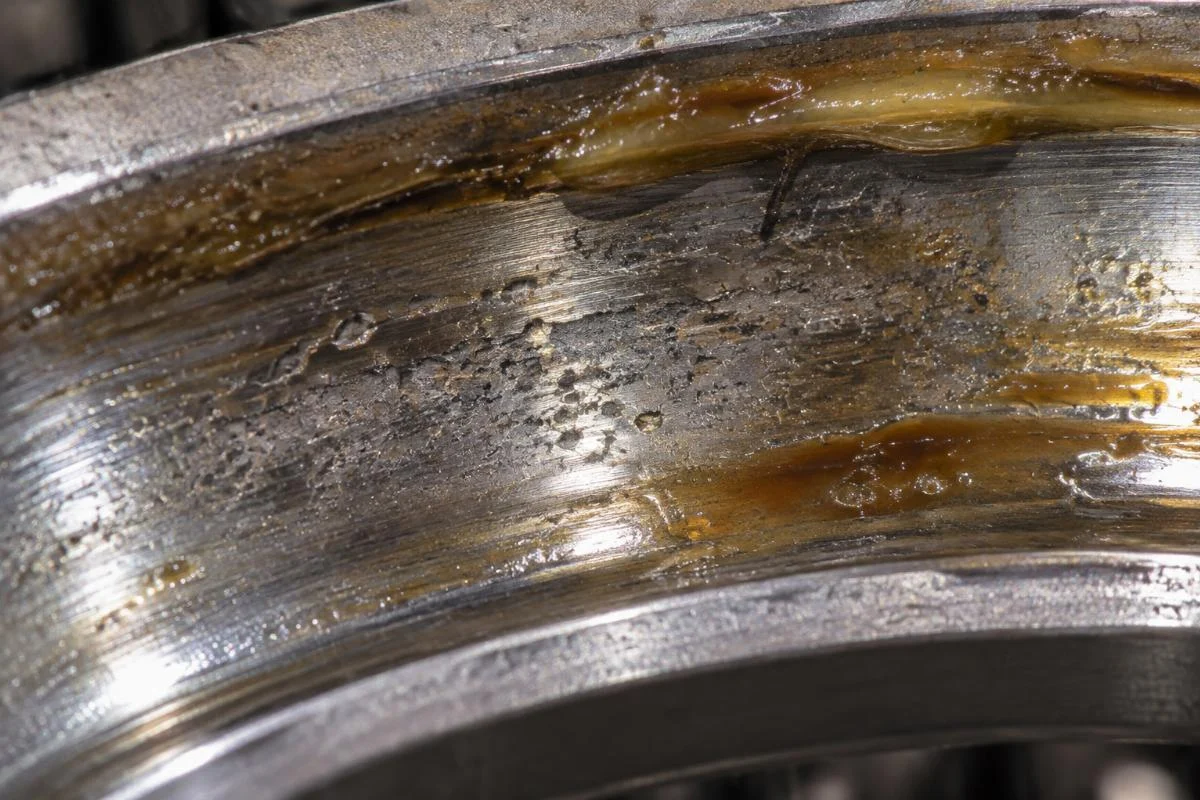
Most operators assume that if a bearing is sealed and boxed, it is immune to time. This is a dangerous misconception. While the outer shield may look intact, the internal environment changes significantly over months and years. The primary culprit is lubricant breakdown. Grease is not a static substance; it consists of base oil and a thickener. Over time, especially in fluctuating temperatures, the base oil can separate from the thickener or evaporate through microscopic permeations in the packaging. When the oil separates, the remaining thickener loses its lubricating properties, leading to increased friction and heat generation upon startup.
Another silent killer is false brinelling and micro-spalling. If bearings are stored without rotation for extended periods, the weight of the rolling elements can create indentations on the raceways. These tiny dents act as stress concentrators. When the bearing finally starts rotating under load, cracks initiate from these points, leading to premature fatigue failure. In humid climates, moisture can penetrate cardboard packaging and compromise the thin layer of rust preventive oil applied at the factory. This leads to superficial rust that, if not caught, pits the precision-ground surfaces.
I once inspected a shipment destined for a heavy equipment overhaul project in Southeast Asia. The ambient humidity was high, and the containers had been sitting at the port for months. Visually, the boxes were fine. But when we opened them, several spherical roller bearings showed faint orange discoloration on the outer rings. This was not deep corrosion, but it was enough to compromise the surface finish. Ignoring such signs leads to noise and vibration issues that are difficult to diagnose once the machine is assembled. Proper Pre-Installation Inspection of Long-Stored JTEKT Bearings Wholesale protocols catch these issues before they reach the field.
What Are the Key Visual Inspection Steps?
Look beyond the box for structural integrity.
Visual inspection is the first line of defense. It requires good lighting, clean hands, and a systematic approach. Start with the packaging. Is it torn? Are there water stains? Even if the box looks dry, check the interior desiccant packets if present. If they are saturated or missing, the risk of moisture ingress is high.
Remove the bearing carefully. Do not drop it. Place it on a clean, soft surface. The first thing to check is the retainer or cage. In tapered roller bearings and spherical roller bearings, the cage holds the rolling elements in place. Look for any signs of deformation, discoloration, or cracking. A deformed cage indicates that the bearing may have been dropped or subjected to excessive vibration during storage. I recall a case where a batch of cylindrical roller bearings arrived with slightly bent cages. They had been stacked improperly in the warehouse. Had they been installed, the imbalance would have caused severe vibration and early failure.
Next, inspect the sealing elements. For sealed bearings, check the rubber or metal shields for cracks, hardening, or detachment. A hardened seal will not keep contaminants out or grease in. For open bearings, check the rust preventive coating. It should be uniform and free of rust spots. Wipe a small area with a clean lint-free cloth. If you see red or brown residue, corrosion has started.
Finally, rotate the bearing by hand. It should turn smoothly and quietly. Any roughness, grinding sensation, or uneven resistance suggests internal damage or contaminated lubrication. This simple tactile test can reveal issues that visual checks miss. However, never force the rotation. If it feels stiff, stop. Further investigation is needed. This step is crucial in Pre-Installation Inspection of Long-Stored JTEKT Bearings Wholesale to filter out obviously defective units before moving to precise measurements.

How to Measure Clearance and Rotational Torque?
Quantify stability to ensure operational tolerance.
Visual checks are subjective. Measurements provide objective data. Internal clearance is a critical parameter that changes with storage conditions. Temperature fluctuations can cause expansion and contraction of the bearing components, potentially altering the fit between the rolling elements and raceways.
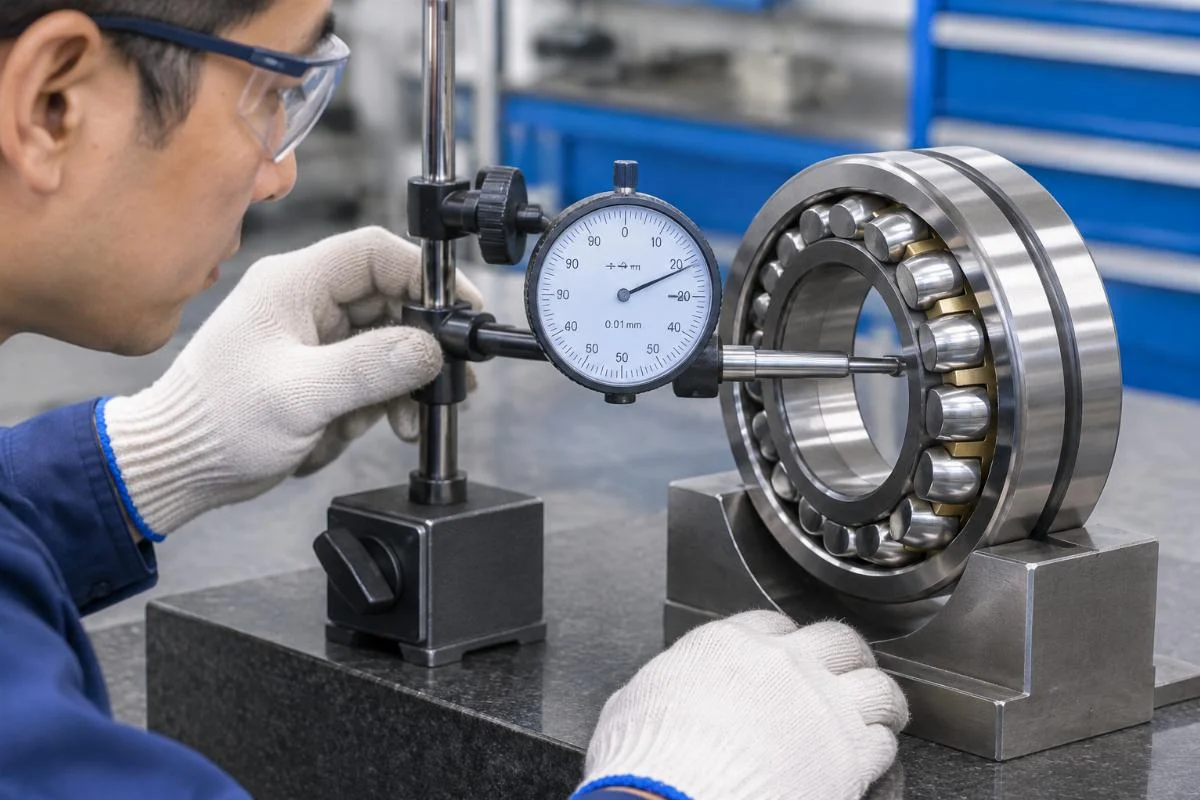
Use a feeler gauge or a dial indicator to measure radial internal clearance. Compare the measured value with the manufacturer’s specifications for the specific bearing class. If the clearance is outside the acceptable range, the bearing is compromised. Excessive clearance leads to noise and reduced load capacity. Insufficient clearance causes overheating and seizure. In one industrial plant MRO scenario, we found that spherical roller bearings stored in an uncontrolled temperature warehouse had developed clearances that deviated significantly from their original C3 specification. Installing them would have led to immediate thermal expansion issues under load.
Rotational torque testing is another vital metric. Use a torque wrench or a specialized bearing tester to measure the starting and running torque. High starting torque often indicates dried or contaminated grease. Inconsistent torque suggests damaged rolling elements or raceways. Record these values. If you are inspecting a large batch, sample testing is acceptable, but for critical applications, every unit should be checked.
| Parameter | Acceptable Condition | Rejection Criteria |
|---|---|---|
| Radial Clearance | Within ISO specified range for class | Outside specified limits |
| Rotational Torque | Smooth, consistent, low resistance | High, erratic, or gritty feeling |
| Surface Finish | Uniform, no pits or scratches | Visible rust, pitting, or spalling |
| Cage Integrity | No deformation, cracks, or discoloration | Bent, cracked, or broken cage |
These measurements provide a factual basis for acceptance or rejection. They remove guesswork from the equation. For buyers engaging in Pre-Installation Inspection of Long-Stored JTEKT Bearings Wholesale, having the tools and knowledge to perform these checks is essential for maintaining quality control.
How to Verify Traceability and Documentation?
Paperwork proves provenance and storage history.
A bearing without documentation is a mystery box. Traceability is not just about authenticity; it is about understanding the life history of the component. Genuine JTEKT bearings come with specific batch numbers, manufacturing dates, and material certificates. Cross-check these details against the supplier’s records.
Verify the manufacturing date. Bearings have a shelf life. While properly stored bearings can last many years, knowing the exact age helps assess the risk of grease degradation. If the documentation is missing, incomplete, or inconsistent, treat the bearing as suspect. Counterfeit products often lack proper traceability or have forged documents that do not match the physical markings on the bearing.
Check for storage condition logs if available. Did the supplier store the bearings in a climate-controlled environment? Were they kept away from direct sunlight and vibrating machinery? This information is crucial for assessing the likelihood of hidden damage. In our operations, we maintain complete traceability documentation for all stock. This allows us to verify the storage history of every unit. When a buyer requests Pre-Installation Inspection of Long-Stored JTEKT Bearings Wholesale, we provide not just the product, but the proof of its care.
Authenticity verification also involves checking the branding. JTEKT markings should be crisp, clear, and correctly positioned. Faint, blurred, or misaligned logos are red flags. Compare the physical bearing with official product images from the manufacturer. Any discrepancy warrants further investigation.

Conclusion
Inspection prevents failure.
Long-stored bearings are not new just because they are unused. Time and environment take their toll. Visual checks, clearance measurements, torque tests, and document verification form the backbone of a robust inspection protocol. Skipping these steps risks equipment downtime and costly repairs. By treating stored inventory with the same scrutiny as new production, operators ensure reliability and longevity. Pre-Installation Inspection of Long-Stored JTEKT Bearings Wholesale is the definitive safeguard against the silent risks of storage.
Target Industries
Industries and equipment where the KOYO products in this article are specified.

Written by the Part Number Company team
Part Number Company is an authorized KOYO distributor supplying JTEKT KOYO bearings, seals, lubrication, tools and condition monitoring parts from North American stock in Greenville, SC, plus KOYO factory orders for rare and custom specifications.
About Part Number Company and our KOYO authorizationProducts in this article
KOYO bearings mentioned above
The KOYO models discussed here are available from Part Number Company, either from Greenville stock or by KOYO factory order.

KOYO stock in Greenville, factory orders for the rest
Common KOYO models ship from our North American warehouse; ultra-precision, custom and rare specifications are ordered direct from KOYO, with full export and customs documents.
Check Stock for Your Models- Stock orders dispatched
- 3 working days
- North America warehouse
- Greenville, SC
- Trade terms
- EXW · FOB · CIF · DAP
- Shipping
- Express · Air · Sea
Keep reading
Related KOYO bearing articles
Installation & Maintenance · · 8 min read
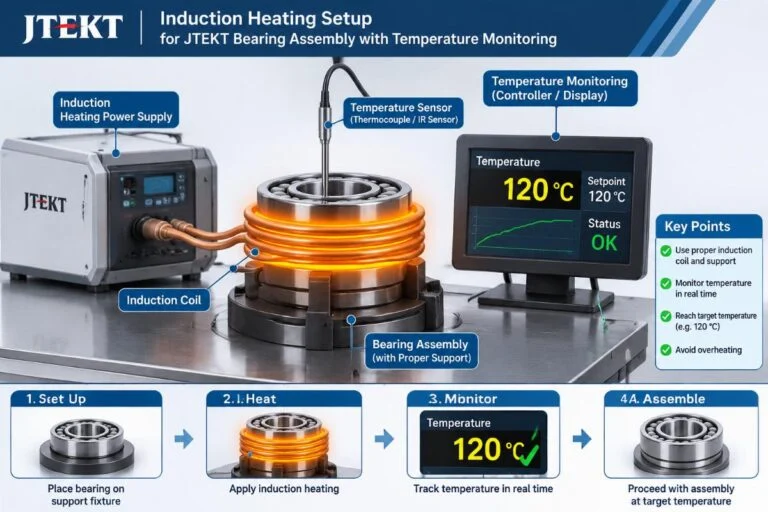
Wholesale JTEKT Bearing Assemblies: Temperature, Noise and Vibration
Properly handling the commissioning JTEKT bearing assemblies process prevents premature seizure caused by installation errors rather than manufacturing defects. Controlling initial run-in temperature, identifying…
Read the Article
Installation & Maintenance · · 7 min read
JTEKT Bearings for Standby Equipment Vibration Control Bulk Supplier
Master JTEKT bearings vibration damage control by correcting installation clearance and enforcing strict humidity control to eliminate startup spikes caused by micro-deformation. Discover proven…
Read the Article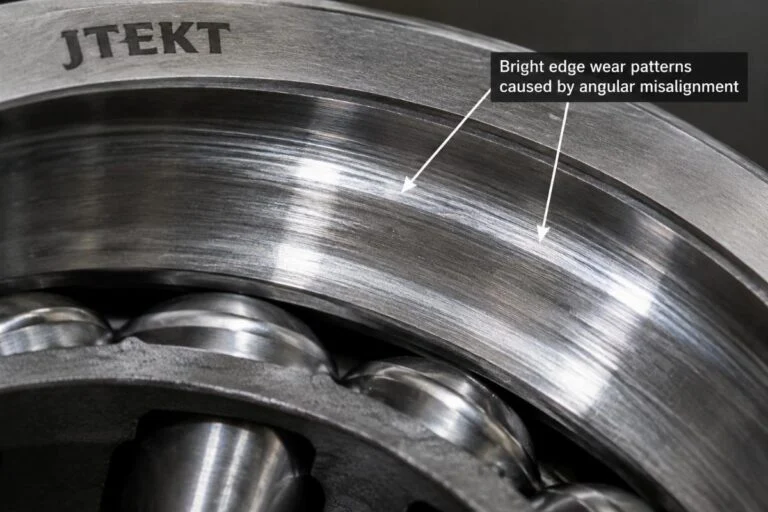
Installation & Maintenance · · 6 min read
Wholesale JTEKT Bearing Assemblies: Misalignment-Induced Loads
Execute precise JTEKT bearing misalignment diagnosis to prevent premature failures caused by sub-millimeter base unevenness and shaft deviation. Discover step-by-step installation checks for soft…
Read the ArticleRequest a Quote
Send your KOYO model list for a consolidated quote
Part Number Company quotes KOYO bearings, seals, lubrication and tools in one proforma invoice, with multi-currency pricing and the documents your customs and QC teams need.
- JTEKT KOYO authorization letter
- KOYO original quality certificate
- Certificate of origin
- Customs, shipping documents and tracking