KOYO Bearing Insights Procurement & Trade FAQs
JTEKT Order Corrections: Managing Clearance Seal Cage Suffixes Wholesale
- Published
- By Part Number Company, Part Number Company
- Authorized KOYO Distributor
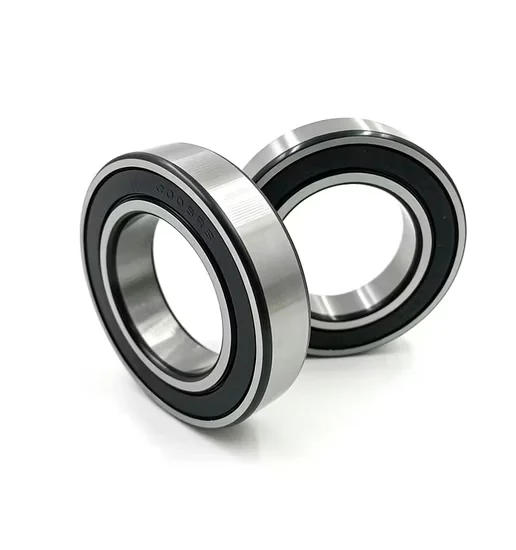
A single letter swap turns perfect stock into scrap.
Accurately decoding JTEKT/KOYO suffixes for clearance, seals, and cages is critical to prevent assembly failures and costly return shipments. Misinterpreting a C3 clearance as CN or swapping ZZ for 2RS does not just affect performance; it causes immediate mechanical seizure or premature wear in high-speed applications. For regional distributors and OEM buyers, mastering these suffixes is the only way to avoid the financial shock of full container reworks.
I still remember the silence in the warehouse when we opened that returned container from Chicago. The client had ordered deep groove ball bearings but mixed up the internal clearance and seal codes. They needed C3 clearance with ZZ shields for a high-temperature motor application but ordered CN clearance with 2RS seals instead. The result was catastrophic. The tighter CN clearance left no room for thermal expansion, and the rubber contact seals created excessive drag at high speeds. The bearings seized during initial assembly. We had to unpack, inspect, and relabel every single unit. That incident changed how I view every purchase order. Now, the first thing I scan is not the quantity, but the suffix string.
Understanding these technical details is not just about engineering; it is about protecting your margin. When you manage JTEKT order corrections effectively, you eliminate the hidden costs of returns and downtime.
Why Do JTEKT Suffix Errors Cause Catastrophic Failures?
The belief that any bearing with the right dimensions will fit is a dangerous misconception. In reality, the suffix code defines the bearing’s operational environment. A mismatch here does not mean the bearing runs poorly; it means it fails completely.
Consider the case of a Middle East steel mill operator. They replaced standard bearings in a conveyor system with what they thought were equivalent parts. However, they overlooked the cage material suffix. The original specification called for a brass cage, suitable for high vibration and moderate temperatures. The replacement had a standard steel cage. Within weeks, the increased friction and heat generation caused the cage to deform. The bearing locked up, stopping the entire production line. The cost of the downtime dwarfed the price difference between the two bearing types.
This happens because suffixes are not arbitrary. They represent specific design choices made by JTEKT engineers to handle load, speed, and temperature. Ignoring them is like ignoring the fuel type in a high-performance engine.
When you source JTEKT bearings, you are not just buying steel rings and balls. You are buying a specific configuration designed for a specific task. A mistake in the suffix is a mistake in the application logic. This is why verifying the suffix against the original equipment manufacturer’s manual is non-negotiable. It is the difference between a smooth installation and a mid-six-figure loss in lost production and replacement costs.
How to Correctly Decode JTEKT Clearance Suffixes?
Internal clearance is the most misunderstood parameter in bearing procurement. Many buyers assume that tighter clearance equals higher precision. This is false. Tighter clearance can lead to thermal seizure if the operating temperature rises.
JTEKT uses standard ISO clearance classes. The most common are CN (Normal), C3 (Greater than Normal), and C4 (Even Greater).
| Clearance Code | Description | Typical Application | Thermal Behavior |
|---|---|---|---|
| CN | Normal Internal Clearance | Standard motors, general machinery | Suitable for stable, moderate temperatures |
| C3 | Greater Than Normal | High-temperature motors, pumps | Accommodates thermal expansion of shaft/housing |
| C4 | Even Greater | Very high temperatures, heavy loads | Maximum allowance for expansion and misalignment |
A common error occurs in electric motor applications. Motors heat up during operation. If you use a CN clearance bearing in a motor that runs hot, the inner ring expands more than the outer ring. This reduces the internal clearance until it becomes negative. The rolling elements get crushed between the races. The result is noise, vibration, and eventual failure.
I once advised a Latin American distributor who was facing a spike in warranty claims for pump bearings. They were using CN clearance bearings in applications where the fluid temperature varied significantly. Switching to C3 clearance solved the issue. The extra space allowed for thermal expansion without preloading the rolling elements. The field complaints dropped noticeably.
When selecting clearance, always consider the temperature differential between the inner and outer rings. If the inner ring is significantly hotter, you need more initial clearance. Do not guess. Check the operating conditions. If in doubt, C3 is often a safer bet for industrial applications than CN, provided the load is not purely radial and light.
What is the Real Difference Between ZZ and 2RS Seals?
Many buyers treat ZZ and 2RS as interchangeable. They are not. The choice between metal shields and rubber seals affects speed limits, grease retention, and contamination protection.
ZZ suffix indicates metal shields on both sides. These are non-contact seals. They leave a small gap between the shield and the inner ring. This allows for higher speeds because there is no friction from rubbing. However, they offer limited protection against fine dust and water splash. They are ideal for clean, high-speed environments like electric motors.
2RS suffix indicates rubber contact seals on both sides. These press against the inner ring, creating a tight barrier. They offer excellent protection against contaminants and retain grease better. However, the contact creates friction, which generates heat and limits the maximum speed. They are suitable for slower, dirty environments like agricultural machinery or construction equipment.
| Feature | ZZ (Metal Shield) | 2RS (Rubber Seal) |
|---|---|---|
| Contact Type | Non-contact | Contact |
| Speed Limit | High | Moderate to Low |
| Contamination Protection | Basic (Large particles) | High (Dust, Water) |
| Grease Retention | Good | Excellent |
| Friction/Heat Generation | Low | Higher |
A European wind farm operator learned this the hard way. They specified 2RS seals for a high-speed generator bearing. The friction from the rubber seals caused excessive heat buildup. The grease degraded quickly, leading to premature bearing failure. Switching to ZZ shields reduced the operating temperature and extended the service life meaningfully.
Conversely, a mining company used ZZ shields in a dusty crusher application. Dust entered the bearing through the gap, contaminating the grease. The bearings failed within months. Switching to 2RS seals blocked the dust and solved the problem.
Always match the seal type to the environment. Clean and fast? Choose ZZ. Dirty and slow? Choose 2RS. Never assume they are universal substitutes.
How Do Cage Suffixes Impact Bearing Performance?
The cage holds the rolling elements in place. It seems like a minor component, but its material and design dictate the bearing’s suitability for vibration, speed, and temperature.
JTEKT uses several cage suffixes. The most common are J (Steel cage), M (Brass cage), and sometimes polyamide variants.
Steel cages (J) are robust and cost-effective. They are suitable for general applications with moderate loads and speeds. However, they can be prone to fatigue in high-vibration environments.
Brass cages (M) are stronger and more resistant to vibration. They handle higher temperatures better than standard steel cages. They are often used in heavy-duty applications like crushers, vibratory screens, and large industrial fans.
Polyamide cages are lightweight and allow for high speeds. They have good chemical resistance but may not handle extreme temperatures as well as metal cages.
| Cage Material | Suffix | Strengths | Weaknesses | Best For |
|---|---|---|---|---|
| Steel | J | Cost-effective, Robust | Lower vibration resistance | General machinery, low-cost applications |
| Brass | M | High strength, Vibration resistant | Heavier, More expensive | Heavy equipment, high-vibration environments |
| Polyamide | None/Specific | Lightweight, High speed | Temperature limits | High-speed motors, clean environments |
I recall a project involving a large textile machine manufacturer. They experienced frequent cage fractures in their spinning frames. The original design used steel cages. The high-speed, continuous operation caused fatigue cracks. Switching to brass cages eliminated the fractures. The brass absorbed the vibration better and maintained integrity under constant stress.
When specifying cages, look beyond the basic load rating. Consider the vibration profile of the machine. If the equipment shakes, choose brass. If it spins fast and clean, consider polyamide or steel. Do not default to steel just because it is cheaper. The cost of a broken cage is far higher than the price difference in the cage material.
How to Verify Suffixes Before Finalizing Orders?
Prevention is cheaper than correction. Verifying suffixes before shipment saves time, money, and reputation.
Start with the datasheet. Do not rely on memory or old invoices. Download the current JTEKT catalog for the specific series. Cross-reference the part number. Check each suffix character. Does C3 match the temperature requirement? Does ZZ match the speed? Does M match the vibration level?
Next, request traceability documents. Genuine JTEKT bearings come with batch numbers and certification. Verify that the suffixes on the certificate match the order. Discrepancies here are red flags.
Finally, implement a pre-shipment inspection. For wholesale orders, a random sample check can catch labeling errors. Look at the bearing itself. The suffix is often laser-etched on the side face. Compare it to the packing list.
In our consolidation process, we treat suffix verification as a critical quality control step. Before any container is sealed, we cross-check the physical goods against the technical specifications. This ensures that what arrives at your dock is exactly what your engineers specified. It is not just about counting boxes; it is about validating technical accuracy.
This rigorous approach prevents the “Chicago incident” from happening again. It ensures that every bearing performs as intended, protecting your operations and your bottom line.
Conclusion
Suffixes are not optional details; they are functional requirements.
Mastering JTEKT/KOYO suffixes for clearance, seals, and cages prevents assembly failures and costly returns. Always verify C3 vs CN for temperature, ZZ vs 2RS for speed and contamination, and cage material for vibration. Accurate decoding protects your investment and ensures operational reliability.
Target Industries
Industries and equipment where the KOYO products in this article are specified.

Written by the Part Number Company team
Part Number Company is an authorized KOYO distributor supplying JTEKT KOYO bearings, seals, lubrication, tools and condition monitoring parts from North American stock in Greenville, SC, plus KOYO factory orders for rare and custom specifications.
About Part Number Company and our KOYO authorizationProducts in this article
KOYO bearings mentioned above
The KOYO models discussed here are available from Part Number Company, either from Greenville stock or by KOYO factory order.

Deep Groove Ball Bearings
6203 Deep Groove Ball Bearing for Electric Motors
View Product
Deep Groove Ball Bearings
6006/6206/6306/6406 Deep Groove Ball Bearing
View Product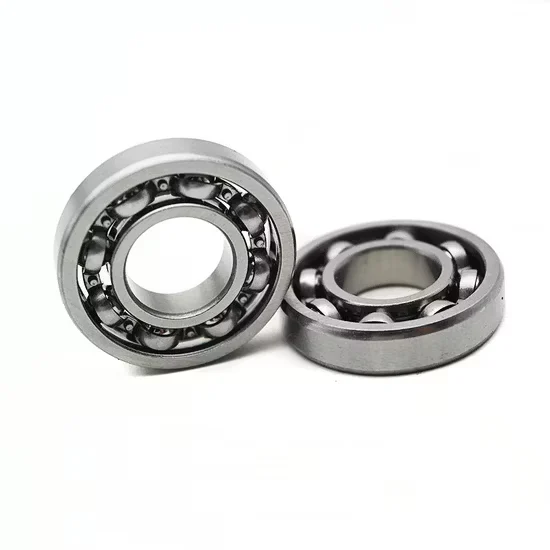
Deep Groove Ball Bearings
6204 Deep Groove Ball Bearing 20×47×14 mm
View Product
Deep Groove Ball Bearings
6003 Deep Groove Ball Bearing for Fan Equipment
View ProductKOYO stock in Greenville, factory orders for the rest
Common KOYO models ship from our North American warehouse; ultra-precision, custom and rare specifications are ordered direct from KOYO, with full export and customs documents.
Check Stock for Your Models- Stock orders dispatched
- 3 working days
- North America warehouse
- Greenville, SC
- Trade terms
- EXW · FOB · CIF · DAP
- Shipping
- Express · Air · Sea
Keep reading
Related KOYO bearing articles
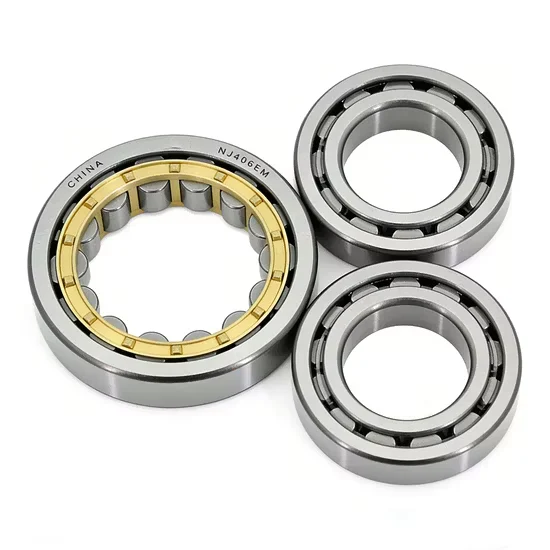
Procurement & Trade FAQs · · 7 min read
JTEKT Bearing Import Supplier: Receiver Inspection and Recordkeeping
Protect your procurement from hidden transit damage and warranty rejections by conducting a rigorous JTEKT bearing import inspection upon delivery. Cross-check physical batch codes…
Read the Article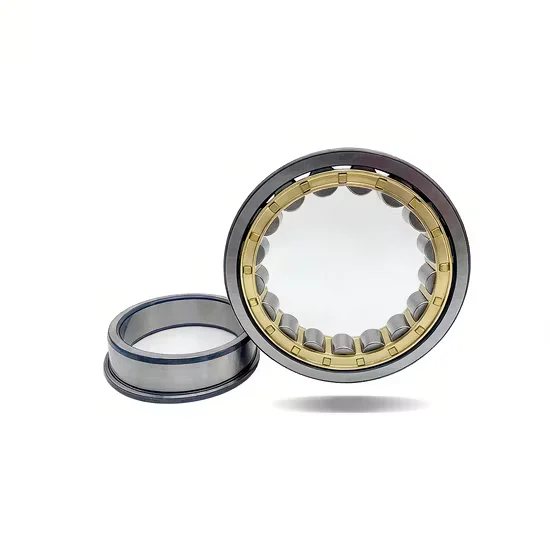
Procurement & Trade FAQs · · 8 min read
Why Dimension-Only RFQs Are Risky for JTEKT Bearing Substitutions
Sourcing JTEKT bearing substitutions using only dimensional data ignores critical internal clearances and cage materials, causing catastrophic thermal seizures and premature fragmentation under heavy…
Read the Article
Procurement & Trade FAQs · · 7 min read
JTEKT Reorder Controls Revision Lot Specification Wholesale
Master JTEKT reorder controls to prevent costly assembly mismatches and customs delays caused by unnoted revision suffixes and mixed lot numbers. Discover how strict…
Read the ArticleRequest a Quote
Send your KOYO model list for a consolidated quote
Part Number Company quotes KOYO bearings, seals, lubrication and tools in one proforma invoice, with multi-currency pricing and the documents your customs and QC teams need.
- JTEKT KOYO authorization letter
- KOYO original quality certificate
- Certificate of origin
- Customs, shipping documents and tracking