KOYO Bearing Insights Procurement & Trade FAQs
JTEKT Bearing Shortages and Nonconformities Wholesale Supplier
- Published
- By Part Number Company, Part Number Company
- Authorized KOYO Distributor

Most think shortages are just packing errors; truly, it often masks diverted or substituted inventory.
Handling JTEKT bearing delivery shortages requires immediate photographic documentation of weight discrepancies and a strict verification of original mill certificates against customs declarations to prevent accepting counterfeit substitutes. Without this dual-layer audit, regional distributors risk integrating nonconforming parts that cause premature equipment failure.
The dust in the Deira district markets carries a specific scent of grease and desperation. Years ago, during a severe supply crunch, I watched a local repair shop owner accept a batch of JTEKT tapered roller bearings from a neighboring stall to keep a mining crusher running. The boxes looked perfect. The labels were crisp. But within weeks, the rollers spalled catastrophically. When we cracked open the failed units, the cage material was wrong—brittle and discolored. It was not a quality control slip; it was a deliberate substitution masked by a shortage. That incident reshaped how I view every incoming container. Today, verifying the authenticity of these components is not just about compliance; it is about survival in heavy industry.
How to immediately document and claim JTEKT bearing shortages?
Standardize photographic evidence and weight checks upon unloading to accelerate supplier claims.
When a shipment arrives with fewer units than the packing list indicates, the instinct is to call the supplier immediately. However, without irrefutable data, the claim becomes a he-said-she-said dispute. The first step is to weigh the entire pallet before breaking the shrink wrap. A discrepancy in total mass often reveals missing inner boxes that are not visible from the outside.
The process must be systematic. First, photograph the shipping container seal and the external condition of the pallets. Second, record the gross weight from the warehouse scale and compare it against the bill of lading. Third, open the outer cartons in a controlled environment, counting each individual box while video recording the process. This visual trail is critical.
A European distributor once faced a ten percent variance in a mixed-brand order. Because they had recorded the unbroken seal and the initial gross weight, they could prove the loss occurred before the goods left the consolidation warehouse. Without that data, the carrier would have blamed improper handling at the destination. For JTEKT bearing shortages, this level of detail separates a valid claim from a rejected one.
What are the hidden risks of accepting nonconforming JTEKT replacements?
Substituted or counterfeit bearings cause premature spalling and catastrophic machinery failure within weeks.
Accepting a “similar” part when the specified JTEKT unit is unavailable is a gamble with high stakes. Counterfeiters have mastered the art of replicating packaging, making visual inspection alone insufficient. The real danger lies in the metallurgy. Genuine JTEKT bearings use specific steel alloys and heat treatment processes to achieve required hardness and fatigue resistance.
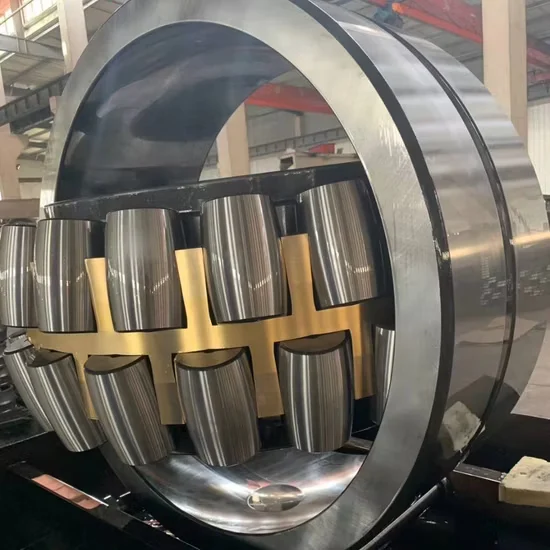
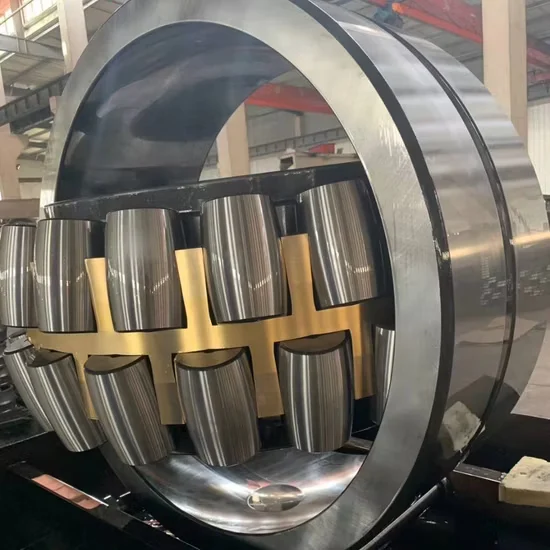
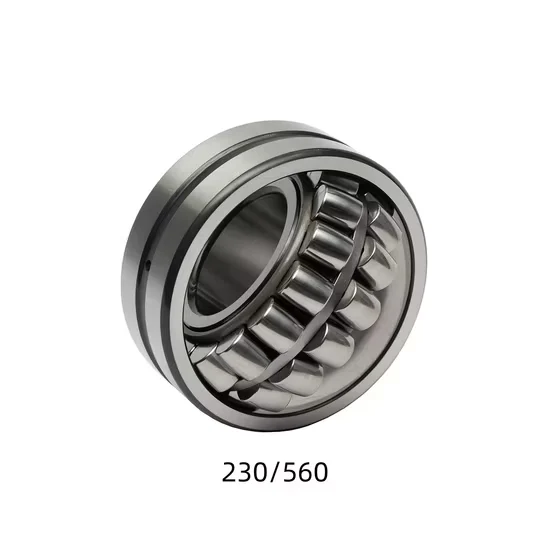
In a case involving a Middle East steel mill, a maintenance team replaced a failed spherical roller bearing with a visually identical unit sourced from an unauthorized vendor during a stockout. The machine ran for only a few hundred hours before seizing. Analysis revealed that the substitute bearing had incorrect cage material and poor surface finish on the rollers. The cost of the replacement bearing was negligible compared to the downtime and the damage to the housing.
| Risk Factor | Genuine JTEKT Bearing | Nonconforming Substitute |
|---|---|---|
| Material Traceability | Full mill certificate provided | No verifiable origin |
| Cage Material | Certified brass or polymer | Unspecified or recycled metal |
| Surface Finish | Micron-level precision | Visible machining marks |
| Failure Mode | Predictable fatigue life | Premature spalling or seizure |
This table highlights why traceability is non-negotiable. The difference between a certified component and a fake is not just in performance but in predictability. Engineers design maintenance schedules based on the expected life of genuine parts. Introducing a nonconforming variable disrupts this calculus, leading to unplanned outages.
Which traceability documents must accompany every JTEKT bearing shipment?
Original mill certificates and customs declarations are non-negotiable for verifying authenticity.
Paperwork is the backbone of trust in international trade. For premium brands like JTEKT, the absence of original mill certificates is a red flag that cannot be ignored. These documents link the physical product to its manufacturing batch, providing proof of origin and quality compliance.
A robust verification protocol involves cross-referencing the batch numbers on the bearing boxes with the factory release notes provided in the mill certificate. Additionally, customs declarations must match the commercial invoice and the packing list exactly. Any discrepancy in HS codes or country of origin suggests potential diversion or fraud.
We maintain strict original factory traceability for all JTEKT and other premium brand shipments. Every container is accompanied by complete customs documentation, ensuring that every SKU can be traced back to its source. This rigor eliminates the risk of receiving mixed or counterfeit goods. In one instance, a client received a mixed-brand container where several SKUs lacked proper certification. By halting the intake and demanding retroactive traceability, we identified that those specific units had been sourced from a secondary market rather than the manufacturer. They were returned before entering the warehouse.
How to establish a fail-safe receiving protocol for mixed-brand orders?
Implement strict AQL sampling and batch-number verification before releasing goods to the warehouse.
Mixed-brand orders are common for MRO operators and distributors who need to consolidate shipments to save on logistics costs. However, mixing brands increases the complexity of quality control. A fail-safe protocol starts with defining an Acceptable Quality Level (AQL) for incoming inspections.
The process begins with a visual check of all outer packaging for signs of tampering. Next, a random sample of boxes is selected based on the AQL standard. Each sampled box is opened to verify the presence of the correct part number, the integrity of the sealing, and the clarity of the labeling. Batch numbers are recorded and checked against the provided documentation.
For high-value or critical applications, such as wind turbine gearboxes or mining crushers, a more rigorous inspection may include dimensional checks using calibrated micrometers. This ensures that the bearings meet the specified tolerances.
By implementing this structured approach, buyers can detect issues before they become operational problems. It transforms the receiving dock from a passive drop-off point into an active quality gate. This protocol is essential for maintaining the integrity of the supply chain, especially when dealing with JTEKT bearing shortages and nonconformities wholesale supplier networks where vigilance is paramount.
Conclusion
Proactive verification prevents costly failures.
Mitigating the risks associated with JTEKT bearing shortages and nonconformities requires a disciplined approach to documentation and inspection. By prioritizing traceability and adhering to strict receiving protocols, distributors and end-users can ensure the reliability of their machinery and protect their operational continuity.
Target Industries
Industries and equipment where the KOYO products in this article are specified.
Written by the Part Number Company team
Part Number Company is an authorized KOYO distributor supplying JTEKT KOYO bearings, seals, lubrication, tools and condition monitoring parts from North American stock in Greenville, SC, plus KOYO factory orders for rare and custom specifications.
About Part Number Company and our KOYO authorizationProducts in this article
KOYO bearings mentioned above
The KOYO models discussed here are available from Part Number Company, either from Greenville stock or by KOYO factory order.
KOYO stock in Greenville, factory orders for the rest
Common KOYO models ship from our North American warehouse; ultra-precision, custom and rare specifications are ordered direct from KOYO, with full export and customs documents.
Check Stock for Your Models- Stock orders dispatched
- 3 working days
- North America warehouse
- Greenville, SC
- Trade terms
- EXW · FOB · CIF · DAP
- Shipping
- Express · Air · Sea
Keep reading
Related KOYO bearing articles
Procurement & Trade FAQs · · 7 min read
JTEKT Bearing Import Supplier: Receiver Inspection and Recordkeeping
Protect your procurement from hidden transit damage and warranty rejections by conducting a rigorous JTEKT bearing import inspection upon delivery. Cross-check physical batch codes…
Read the Article
Procurement & Trade FAQs · · 8 min read
Why Dimension-Only RFQs Are Risky for JTEKT Bearing Substitutions
Sourcing JTEKT bearing substitutions using only dimensional data ignores critical internal clearances and cage materials, causing catastrophic thermal seizures and premature fragmentation under heavy…
Read the Article Procurement & Trade FAQs · · 7 min read
JTEKT Reorder Controls Revision Lot Specification Wholesale
Master JTEKT reorder controls to prevent costly assembly mismatches and customs delays caused by unnoted revision suffixes and mixed lot numbers. Discover how strict…
Read the ArticleRequest a Quote
Send your KOYO model list for a consolidated quote
Part Number Company quotes KOYO bearings, seals, lubrication and tools in one proforma invoice, with multi-currency pricing and the documents your customs and QC teams need.
- JTEKT KOYO authorization letter
- KOYO original quality certificate
- Certificate of origin
- Customs, shipping documents and tracking