KOYO Bearing Insights Technical Resources
JTEKT Bearing Operating Clearance Fit & Temperature Effects Wholesale
- Published
- By Part Number Company, Part Number Company
- Authorized KOYO Distributor

Most high-temperature bearing failures are not caused by poor lubrication, but by uncalculated thermal expansion eating up the internal clearance.
Accurate JTEKT bearing operating clearance requires calculating thermal expansion and fit interference to prevent seizure in high-temperature, heavy-load environments. Engineers must subtract the reduction caused by interference fits and differential thermal growth from the initial radial clearance to determine the final operating state.
I still remember the dust choking the air at a copper mine near the equator. The ambient temperature was already punishing, but the real killer was the heat radiating from the crusher main shafts. We had installed what we thought were robust bearings, selected based on standard room-temperature catalogs. Within days, the units seized. The client was furious, pointing at the smoking housings as proof of product failure. But the bearings were not defective. The problem was that we had treated the JTEKT bearing operating clearance as a static value, ignoring how the intense heat would cause the inner ring to expand faster than the outer ring, effectively closing the gap until metal touched metal. That failure taught me that in heavy industry, clearance is dynamic, not static.
Understanding this dynamic is critical for anyone sourcing components for extreme conditions. When you evaluate JTEKT bearing operating clearance, you are not just looking at a catalog number; you are predicting the physical behavior of steel under stress and heat.
Why Does Operating Temperature Alter JTEKT Bearing Clearance?
Thermal expansion of inner and outer rings shifts the internal clearance dynamically, often reducing it to zero in high-heat applications.
In many standard applications, the temperature difference between the inner and outer rings is negligible. However, in heavy machinery like mining crushers or steel mill rollers, the inner ring rotates with the hot shaft, while the outer ring sits in a housing that may be cooled by ambient air or forced ventilation. This creates a temperature gradient. The inner ring expands radially outward, pushing against the rolling elements. If the initial clearance is not sufficient to accommodate this expansion, the bearing preloads itself unintentionally.
The material of the bearing rings, typically high-carbon chromium steel, has a specific coefficient of thermal expansion. As the temperature rises, the diameter of the inner ring increases. Simultaneously, the outer ring may also expand, but if the housing is massive and acts as a heat sink, its expansion might lag behind. This differential expansion is the silent killer of bearing life.
Consider a steel mill roller application. The continuous high heat means the inner ring temperature can be significantly higher than the outer ring. If you select a standard C0 clearance bearing, the thermal growth will likely eliminate the clearance entirely. The result is not just increased friction, but a rapid rise in operating temperature, leading to lubricant breakdown and eventual seizure. This is why understanding the KOYO bearing thermal clearance implications is vital. The brand, part of the JTEKT group, designs specific clearance classes to handle these exact scenarios, but only if the engineer selects the correct class for the thermal profile.

How Does Fit Interference Affect Initial Clearance?
Interference fits expand the inner ring, directly reducing the available radial clearance before the machine even starts.
Before the machine heats up, the act of mounting the bearing on the shaft changes its geometry. An interference fit, where the shaft diameter is slightly larger than the bearing bore, forces the inner ring to expand to fit over the shaft. This expansion increases the circumference of the inner ring, which in turn reduces the internal radial clearance. Many engineers overlook this “fit loss,” focusing only on thermal effects. This is a critical error.
The amount of clearance reduction depends on the magnitude of the interference and the geometry of the bearing. A heavy interference fit, necessary for high-load applications to prevent creep, can consume a significant portion of the initial clearance. If you start with a C3 clearance and lose half of it to fit interference, you are left with very little margin for thermal expansion.
In a gearbox application, the impact of interference fit is pronounced. The shafts are often hardened and ground to precise tolerances, requiring a tight fit to transmit torque without slippage. If the initial radial clearance is not chosen to account for this reduction, the bearing will operate under preload from the moment it is installed. This preload generates heat, which causes further expansion, creating a vicious cycle. The key is to calculate the fit reduction and subtract it from the initial clearance to find the “mounted clearance.” Only then can you assess if the remaining clearance is sufficient for the operating temperature.

What Are the Steps to Calculate Operating Clearance?
Subtract temperature and fit reductions from the initial C0 clearance to find the final operating clearance.
Calculating the true JTEKT bearing operating clearance is a step-by-step process that combines mechanical fitting data with thermal physics. It is not a guesswork exercise. Here is the method used by experienced engineers to ensure reliability in harsh environments.
- Determine Initial Radial Clearance: Start with the manufacturer’s specified initial clearance for the selected bearing size and clearance class (e.g., C3 or C4). This is the baseline.
- Calculate Fit Reduction: Estimate the reduction in clearance caused by the interference fit on the inner ring and, if applicable, the outer ring. This requires knowing the shaft and housing tolerances. The inner ring expansion due to fit is the primary factor.
- Calculate Thermal Reduction: Estimate the temperature difference between the inner and outer rings during operation. Use the coefficient of thermal expansion for bearing steel to calculate how much the inner ring will expand relative to the outer ring. This gives you the thermal clearance loss.
- Compute Operating Clearance: Subtract both the fit reduction and the thermal reduction from the initial radial clearance. The result is the estimated operating clearance.
If the calculated operating clearance is negative or close to zero, the bearing will fail. You must select a bearing with a larger initial clearance class (such as C4) to compensate. This calculation is the core of proper bearing selection. It transforms the abstract concept of JTEKT bearing operating clearance into a tangible engineering parameter.
A common mistake is assuming that a larger initial clearance is always safer. In reality, excessive clearance can lead to vibration, noise, and early fatigue due to improper load distribution among the rolling elements. The goal is not maximum clearance, but optimal clearance.

How to Select the Right JTEKT Clearance for Heavy Equipment?
Match C3/C4 clearances with specific shaft/housing tolerances based on thermal profiles.
Selecting the right clearance class is not about picking the largest number. It is about matching the bearing to the specific demands of the application. For heavy equipment like mining crushers, where ambient temperatures are high and loads are shock-intensive, a C3 clearance is often the minimum requirement. In more extreme cases, such as the hot end of a steel mill line, a C4 clearance may be necessary.
The selection process involves analyzing the thermal profile of the machine. If the inner ring temperature is expected to rise significantly above the outer ring, you need extra initial clearance. You also need to consider the fit. If the shaft tolerance is tight, causing significant interference, you must compensate with a larger initial clearance class.
For OEM engineers and MRO managers, this means moving beyond standard catalog recommendations. You must look at the specific operating conditions. A bearing that works perfectly in a temperate climate warehouse may fail quickly in a tropical mining site. This is where the expertise of a supplier who understands these nuances becomes valuable. Having access to full C3 and C4 clearance options allows for precise matching.
When sourcing these components, ensure that the supplier can provide genuine products with verifiable traceability. Counterfeit bearings often have inconsistent internal clearances, rendering any careful calculation useless. The reliability of your calculation depends on the accuracy of the initial component.

Conclusion
Precise calculation of thermal and fit effects is the only way to guarantee bearing survival in extreme conditions.
Ignoring the dynamic nature of clearance leads to premature failure, regardless of the brand quality. By accounting for interference fit reduction and thermal expansion, engineers can select the correct JTEKT bearing operating clearance to ensure longevity and reliability. This approach transforms bearing selection from a guessing game into a predictable engineering science.
Target Industries
Industries and equipment where the KOYO products in this article are specified.

Written by the Part Number Company team
Part Number Company is an authorized KOYO distributor supplying JTEKT KOYO bearings, seals, lubrication, tools and condition monitoring parts from North American stock in Greenville, SC, plus KOYO factory orders for rare and custom specifications.
About Part Number Company and our KOYO authorizationProducts in this article
KOYO bearings mentioned above
The KOYO models discussed here are available from Part Number Company, either from Greenville stock or by KOYO factory order.
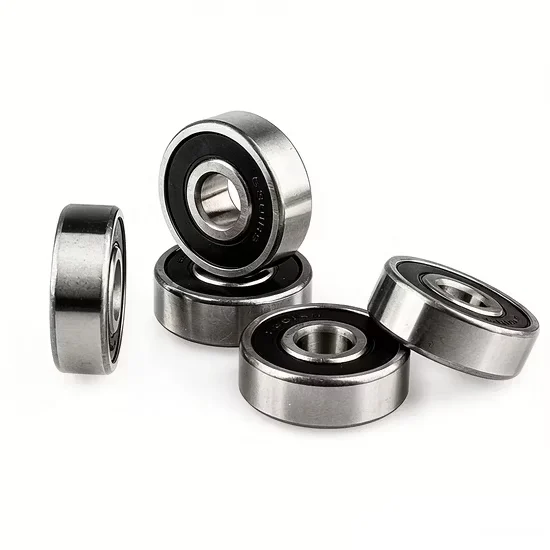
Deep Groove Ball Bearings
6044 Deep Groove Ball Bearing for Mining Machinery
View Product
Deep Groove Ball Bearings
6230 Deep Groove Ball Bearing 150×270×45 mm for Mining Machinery
View Product
Deep Groove Ball Bearings
6013 Deep Groove Ball Bearing 65×100×18 mm for Mining Machinery
View Product
Spherical Roller Bearings
230/1000 Spherical Roller Bearing
View ProductKOYO stock in Greenville, factory orders for the rest
Common KOYO models ship from our North American warehouse; ultra-precision, custom and rare specifications are ordered direct from KOYO, with full export and customs documents.
Check Stock for Your Models- Stock orders dispatched
- 3 working days
- North America warehouse
- Greenville, SC
- Trade terms
- EXW · FOB · CIF · DAP
- Shipping
- Express · Air · Sea
Keep reading
Related KOYO bearing articles

Technical Resources · · 7 min read
JTEKT Bearing Selection Inputs Assumptions Wholesale
Accurate JTEKT bearing selection verification prevents premature failures caused by blindly relying on legacy drawings and outdated load assumptions. Engineers must validate actual radial…
Read the Article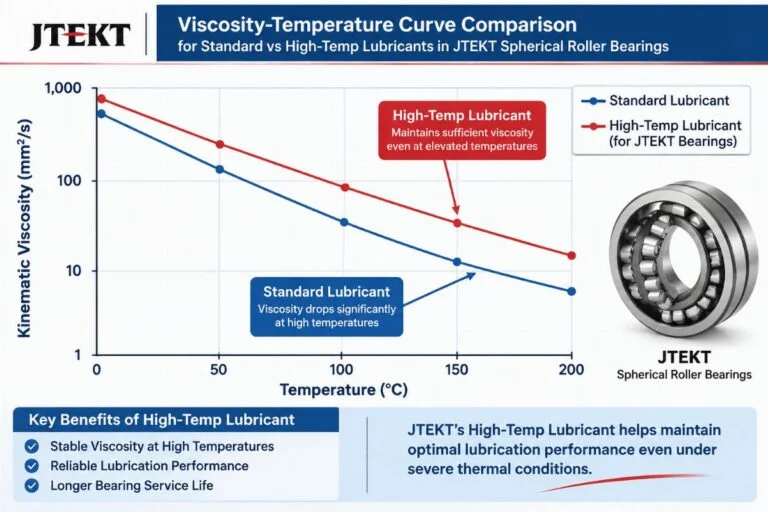
Technical Resources · · 7 min read
Wholesale JTEKT Bearing Oil Viscosity Checks at Operating Temperature
Prevent catastrophic bearing seizure by performing a rigorous JTEKT bearing oil viscosity check at actual operating temperatures instead of relying on misleading room-temperature specs.…
Read the Article
Technical Resources · · 7 min read
JTEKT Bearing Misalignment Limits and Housing Deflection Supplier
JTEKT bearing misalignment limits fail when excessive housing deflection locks the inner ring, causing premature fatigue in heavy machinery. Discover how to measure base…
Read the ArticleRequest a Quote
Send your KOYO model list for a consolidated quote
Part Number Company quotes KOYO bearings, seals, lubrication and tools in one proforma invoice, with multi-currency pricing and the documents your customs and QC teams need.
- JTEKT KOYO authorization letter
- KOYO original quality certificate
- Certificate of origin
- Customs, shipping documents and tracking