KOYO Bearing Insights Procurement & Trade FAQs
How to Reconcile JTEKT Bearing Invoices, Packing Lists & Part Numbers
- Published
- By Part Number Company, Part Number Company
- Authorized KOYO Distributor
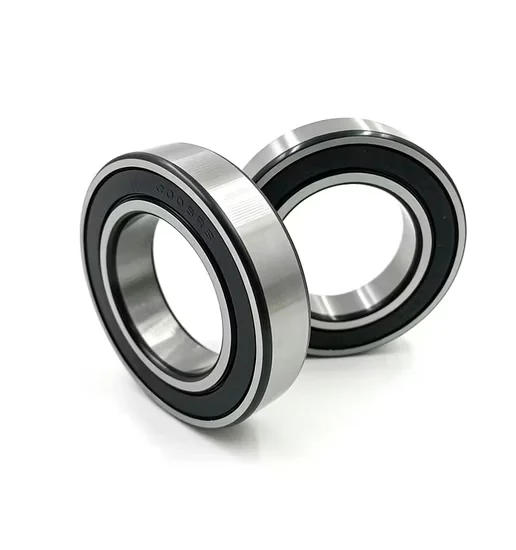
Mismatched part numbers on JTEKT documents do not indicate counterfeit goods.
To reconcile JTEKT bearing invoices, packing lists, and part numbers, you must cross-reference the factory production code on the physical label with the commercial order code on the invoice and the customs declaration code on the packing list. These three identifiers serve different logistical and regulatory purposes. Alignment requires mapping the suffix letters denoting internal specifications against the official KOYO catalog structure, ensuring the HS code description matches the commercial invoice exactly to prevent customs delays.
I still remember the sweat on my forehead standing at a dusty port in Nigeria, watching a crane operator lower a container of JTEKT tapered roller bearings onto the dock. The site engineer held up a packing list, pointing angrily at a part number that differed by two letters from the one on the commercial invoice. The entire shipment was stuck. Customs officials suspected fraud because the codes did not match perfectly. I had to spend days explaining that the manufacturer’s internal batch tracking system uses a different alphanumeric structure than the global sales order format. That incident taught me that document reconciliation is not about finding identical strings of text, but about understanding the translation layer between factory floor logic and international trade compliance.
Understanding why these discrepancies occur is the first step toward smooth clearance. Most buyers assume a one-to-one correspondence between all documents, but industrial bearing supply chains operate on multi-layered identification systems.
Why Do JTEKT Part Numbers Differ Across Documents?
Discrepancies arise because factory codes, order codes, and customs codes serve distinct operational purposes within the supply chain.
The part number printed on the bearing box or the metal tag attached to the unit is often a factory production code. This identifier includes detailed suffixes indicating specific internal clearances, cage materials, or heat treatment processes unique to that manufacturing batch. In contrast, the commercial invoice lists the order code agreed upon during procurement. This code is streamlined for billing and may omit certain technical suffixes that are irrelevant to the financial transaction but critical for engineering verification.
Furthermore, the packing list used for customs clearance must align with Harmonized System (HS) codes. Customs authorities in many regions require descriptions that match local tariff schedules, which may lead to slight modifications in how the part number is presented or grouped. For instance, a single invoice line item might cover multiple variants of a deep-groove ball bearing, each with a slightly different factory code, but the packing list groups them under a generic header for duty assessment.
A common scenario involves angular contact ball bearings. The factory label might read 7205BDBP4, indicating a specific preload class and precision grade. However, the purchase order and invoice might simply list 7205BD to simplify the transaction, assuming the buyer knows the standard specification for that series. When customs inspectors see 7205BDBP4 on the physical goods but 7205BD on the paperwork, they flag it as a mismatch. This is not an error in shipment but a difference in granularity between technical identification and commercial documentation.
Recognizing this structural difference prevents unnecessary panic. The key is not to demand identical text across all documents, but to ensure that the simplified code on the invoice logically encompasses the detailed code on the physical product. This requires familiarity with the brand’s numbering hierarchy.
How to Cross-Check Invoices and Packing Lists?
Use a three-step matrix to map suffixes and batch codes between your purchase order and the supplier’s shipping documents.
Reconciling these documents requires a systematic approach rather than a visual scan. Start by extracting the base part number from the invoice. This is usually the numeric core followed by primary suffixes. Next, examine the packing list for any additional alphanumeric characters appended to the base number. These often represent internal traceability codes or minor variant indicators. Finally, verify these against the physical labels on the received goods.
Consider a case where a European wind farm operator ordered cylindrical roller bearings. The invoice listed NU2316EMAC3. The packing list, however, showed NU2316EMAC3-FG. The extra -FG suffix indicated a specific grease fill quantity required for high-altitude operation. The buyer initially rejected the shipment, thinking the wrong item was sent. Upon checking the technical datasheet, they realized -FG was an optional suffix not always included in the commercial order code but mandatory for the packing list to ensure correct maintenance handling.
To avoid such confusion, create a cross-reference table during the procurement phase. List the invoice part number in one column and the expected factory code variations in another. Ask your supplier to confirm if any suffixes on the packing list are purely logistical or if they denote a technical change. This proactive step turns a potential customs dispute into a routine verification.
| Document Type | Code Structure Example | Purpose | Verification Method |
|---|---|---|---|
| Commercial Invoice | 6205-2RS | Billing and payment | Match against Purchase Order |
| Packing List | 6205-2RS/C3L01 | Logistics and customs | Check against physical label |
| Factory Label | 6205-2RS/C3L01-Batch99 | Production traceability | Verify via mill certificate |
This matrix helps clarify that the packing list often contains more granular data than the invoice. The presence of extra characters does not imply a wrong product, but rather a more detailed description for logistics handlers.
By standardizing this check, you reduce the time spent on manual verification and minimize the risk of human error during the stressful unloading process.
What Documents Prevent Customs Delays?
Ensure HS codes match commercial invoice descriptions exactly to avoid classification disputes at the border.
Customs delays are rarely caused by the bearing itself but by the inconsistency between the declared HS code and the product description. If the invoice describes a “tapered roller bearing” but the HS code corresponds to a “ball bearing,” inspectors will halt the clearance process. Even minor typos in the part number can trigger automated red flags in customs systems.
A Middle East steel mill once faced a multi-week delay because the packing list quantified items in “sets” while the invoice listed them in “pieces.” Although the total count was identical, the unit of measure discrepancy raised suspicions of under-declaration. The solution was to issue a corrected packing list that mirrored the invoice’s unit of measure exactly, accompanied by a letter of explanation from the supplier.
To prevent this, request a pre-shipment document draft. Review the HS code classification against the latest local tariff schedule. Ensure that the part numbers on the packing list are either identical to the invoice or clearly linked via a reference note. Some jurisdictions allow a “see attached list” clause, but others require every item to be explicitly stated. Knowing your destination country’s specific requirements is crucial.
Additionally, include a detailed product description that bridges the gap between technical and commercial terms. Instead of just listing the part number, add a brief description like “Deep groove ball bearing, stainless steel, open type.” This provides context for customs officers who may not be familiar with industrial coding systems.
Proactive document alignment is far cheaper than paying demurrage charges. A few hours of review before shipment can save weeks of port storage fees.
How to Verify Authenticity Amidst Code Differences?
Request original mill certificates and traceability documents to confirm genuine origin despite coding variations.
When part numbers differ, the biggest fear is receiving counterfeit goods. However, genuine JTEKT products often have complex coding due to global manufacturing networks. To verify authenticity, do not rely solely on the part number string. Instead, ask for the mill certificate or quality inspection report associated with the specific batch number found on the packaging.
These documents contain unique serial numbers that link the physical product to its production history. They confirm the material composition, heat treatment, and dimensional accuracy. If the supplier cannot provide these traceability documents, the risk of counterfeit increases significantly. Genuine manufacturers maintain rigorous records for every batch produced.
In one instance, a buyer in Southeast Asia received bearings with a slightly different font on the label compared to previous orders. Suspecting fakes, they requested the original test reports. The supplier provided documents showing that the font change was due to a recent update in the manufacturer’s printing equipment at a specific facility. The batch numbers on the reports matched the labels, confirming the goods were genuine.
Traceability documentation is the ultimate proof of authenticity. It transcends superficial differences in labeling or coding styles. By insisting on these documents, you protect your operation from both counterfeit risks and unnecessary misunderstandings about code variations. Our one-stop sourcing service provides complete traceability documentation and cross-brand equivalent consultation to ensure 100% document alignment for smooth global shipping.
Conclusion
Document reconciliation is about understanding the logic behind the codes, not just matching characters.
Discrepancies between JTEKT invoices, packing lists, and part numbers are normal structural features of global trade, not errors. By cross-referencing factory codes with commercial orders and securing proper traceability documentation, you can ensure smooth customs clearance and avoid costly delays. Always prioritize verified documentation over visual similarity.
Target Industries
Industries and equipment where the KOYO products in this article are specified.

Written by the Part Number Company team
Part Number Company is an authorized KOYO distributor supplying JTEKT KOYO bearings, seals, lubrication, tools and condition monitoring parts from North American stock in Greenville, SC, plus KOYO factory orders for rare and custom specifications.
About Part Number Company and our KOYO authorizationProducts in this article
KOYO bearings mentioned above
The KOYO models discussed here are available from Part Number Company, either from Greenville stock or by KOYO factory order.

Deep Groove Ball Bearings
6203 Deep Groove Ball Bearing for Electric Motors
View Product
Deep Groove Ball Bearings
6006/6206/6306/6406 Deep Groove Ball Bearing
View Product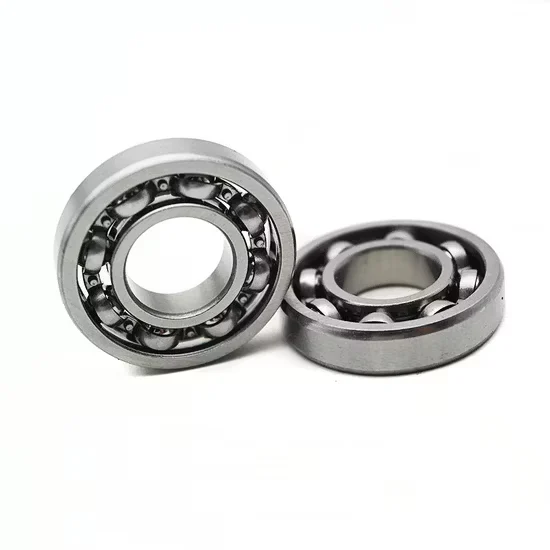
Deep Groove Ball Bearings
6204 Deep Groove Ball Bearing 20×47×14 mm
View Product
Deep Groove Ball Bearings
6003 Deep Groove Ball Bearing for Fan Equipment
View ProductKOYO stock in Greenville, factory orders for the rest
Common KOYO models ship from our North American warehouse; ultra-precision, custom and rare specifications are ordered direct from KOYO, with full export and customs documents.
Check Stock for Your Models- Stock orders dispatched
- 3 working days
- North America warehouse
- Greenville, SC
- Trade terms
- EXW · FOB · CIF · DAP
- Shipping
- Express · Air · Sea
Keep reading
Related KOYO bearing articles
Procurement & Trade FAQs · · 7 min read
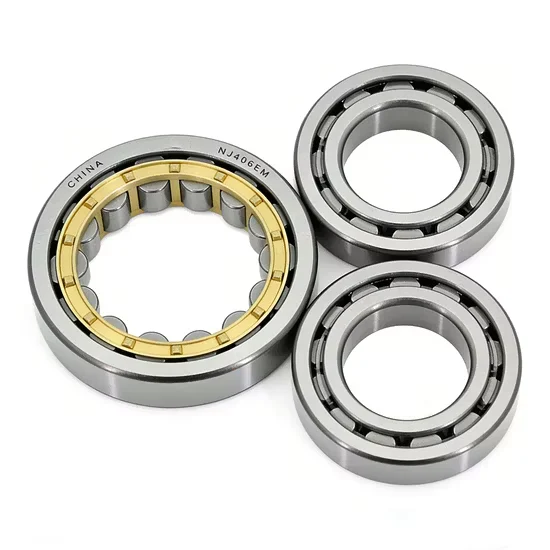
JTEKT Bearing Import Supplier: Receiver Inspection and Recordkeeping
Protect your procurement from hidden transit damage and warranty rejections by conducting a rigorous JTEKT bearing import inspection upon delivery. Cross-check physical batch codes…
Read the Article
Procurement & Trade FAQs · · 8 min read
Why Dimension-Only RFQs Are Risky for JTEKT Bearing Substitutions
Sourcing JTEKT bearing substitutions using only dimensional data ignores critical internal clearances and cage materials, causing catastrophic thermal seizures and premature fragmentation under heavy…
Read the Article
Procurement & Trade FAQs · · 7 min read
JTEKT Reorder Controls Revision Lot Specification Wholesale
Master JTEKT reorder controls to prevent costly assembly mismatches and customs delays caused by unnoted revision suffixes and mixed lot numbers. Discover how strict…
Read the ArticleRequest a Quote
Send your KOYO model list for a consolidated quote
Part Number Company quotes KOYO bearings, seals, lubrication and tools in one proforma invoice, with multi-currency pricing and the documents your customs and QC teams need.
- JTEKT KOYO authorization letter
- KOYO original quality certificate
- Certificate of origin
- Customs, shipping documents and tracking