KOYO Bearing Insights Procurement & Trade FAQs
How to Negotiate JTEKT Bearing Order Quantities Without Changing Specs
- Published
- By Part Number Company, Part Number Company
- Authorized KOYO Distributor
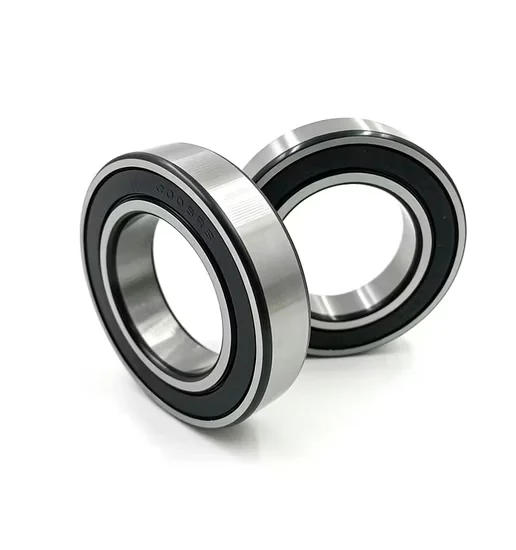
You do not need to accept substitute brands to meet minimum order requirements.
Buyers can meet JTEKT bearing MOQs without altering exact specifications by consolidating mixed-standard bearing orders from flexible global suppliers. This approach preserves the integrity of original part numbers while satisfying total quantity thresholds through strategic SKU aggregation.
I still remember the heat in that Dongguan workshop. A reducer manufacturer was desperate for a specific batch of JTEKT tapered roller bearings. The factory’s minimum order quantity (MOQ) was rigidly set at five hundred sets, but the client only needed one hundred and twenty for an urgent production run. The local sales representative, pressured to close the deal, suggested filling the gap with domestic alternatives of the same dimensions. It seemed like a practical compromise at the time. The client agreed, and the mixed batch was installed. Within weeks, the cages in the substituted bearings failed under high-temperature operation, causing the entire assembly to seize. The resulting return and reputational damage cost far more than the initial savings. That incident reshaped my approach to procurement. Now, when buyers face strict JTEKT bearing MOQ constraints, I never advise changing specifications. Instead, we look at the broader inventory. By adding standard deep-groove ball bearings or spherical roller bearings to the order, we reach the required volume without touching the critical tapered roller specs. This method keeps the machinery safe and the supply chain compliant.
This strategy is not just about avoiding mistakes; it is about understanding how global supply chains actually work. Many procurement managers believe they are stuck between paying for excess inventory they do not need or risking equipment failure with inferior substitutes. Neither is true. The key lies in how you structure the order.
Why do JTEKT factories enforce strict MOQs for specific models?
Production line setups and raw material batching dictate rigid minimums, not just sales policies.
It is easy to view MOQs as arbitrary sales targets designed to maximize revenue. However, the reality on the factory floor is driven by manufacturing efficiency. JTEKT, like other major bearing manufacturers, operates on highly automated lines optimized for long runs of specific sizes. Changing over a line from one bearing size to another involves significant downtime, recalibration, and cleaning processes.
Furthermore, the steel used for bearing rings and rolling elements is often purchased in large batches to ensure consistent metallurgical properties. Small orders disrupt this batching process, leading to higher per-unit costs that the manufacturer passes on through MOQ enforcement. This is why authorized channels strictly enforce these limits. They are protecting the economic viability of their production schedules.
For a buyer, this means that asking for a lower MOQ on a single, low-volume part number is rarely successful. The factory cannot justify the setup cost for a small batch. Understanding this industrial constraint is the first step in negotiating effectively. You are not fighting a policy; you are working against a physical production reality. Recognizing this shifts the conversation from “please lower your limit” to “how can we make this order efficient for you?”
How can you meet MOQs without changing exact bearing specifications?
Consolidating various standard JTEKT models into a single mixed order satisfies total quantity requirements while preserving exact part numbers.
The most effective way to bypass strict JTEKT bearing MOQ limits is through mixed-order consolidation. Instead of ordering only the specific tapered roller bearing you need, you combine it with other standard JTEKT items that your facility or clients regularly consume. This could include deep-groove ball bearings, cylindrical roller bearings, or angular contact ball bearings.
Consider a mining MRO manager who needed an urgent replacement for spherical roller bearings. The MOQ for that specific size was prohibitive for a single emergency repair. By consolidating this urgent order with a scheduled restock of standard pillow block bearings and insert bearings, the total unit count reached the wholesale tier. The factory saw a large, efficient order, and the buyer received the exact parts needed without overstocking slow-moving items.
This method works because it aligns with the manufacturer’s desire for volume while respecting the buyer’s need for specificity. It requires a clear understanding of your own consumption patterns. If you are a distributor, this means looking across your entire customer base to identify common JTEKT parts that can be grouped together. If you are an end-user, it means coordinating maintenance schedules to bundle different bearing types into a single procurement cycle.
The key is flexibility in the mix, not in the specification. You do not change the part number of the critical bearing. You simply add volume through other genuine JTEKT products. This ensures that every bearing installed meets the original engineering standards, eliminating the risk of compatibility issues or premature failure.
What are the risks of accepting substitute brands to lower quantities?
Material and tolerance differences in substitutes can cause severe equipment failures, leading to higher long-term costs.
When faced with high MOQs, the temptation to switch to a cheaper, more available brand is strong. Many buyers assume that if the dimensions match, the performance will be similar. This is a dangerous misconception. Bearings are not just metal rings; they are precision-engineered components where material purity, heat treatment, and internal clearance play critical roles.
Substitute brands often use different steel grades or less rigorous quality control processes. While they may fit physically, they may not handle the same load ratings or thermal stresses. In the automotive aftermarket, for example, using a non-OEM angular contact bearing in a high-speed application can lead to noise, vibration, and eventual seizure. The cost of replacing the bearing is minor compared to the damage caused to the housing, shaft, or surrounding machinery.
Moreover, traceability becomes an issue. Genuine JTEKT bearings come with documentation that verifies their origin and quality. Substitute parts often lack this level of transparency, making it difficult to diagnose failures or claim warranties. For industries like wind power or steel manufacturing, where downtime costs thousands per hour, the risk of using unverified substitutes is unacceptable.
The short-term savings from avoiding MOQs by switching brands are often illusory. When you factor in the potential for early failure, increased maintenance labor, and production losses, the true cost of substitution far exceeds the cost of meeting the original MOQ through consolidation.
How does third-party consolidation solve the MOQ dilemma?
Global suppliers with massive spot inventory can mix brands and sizes to meet any MOQ while guaranteeing 100% genuine products.
This is where specialized global suppliers play a crucial role. Unlike direct factory channels that are bound by production schedules, large distributors maintain extensive spot inventories of thousands of standard part numbers. They act as a buffer, absorbing the MOQ pressure from the manufacturer and offering flexibility to the buyer.
By sourcing from a supplier with a broad portfolio, you can access genuine JTEKT bearings without being constrained by factory minimums. These suppliers can consolidate orders from multiple clients, creating the volume needed to purchase directly from the manufacturer at favorable terms. They then pass this flexibility on to you, allowing you to buy exactly what you need, whether it is a single unit for an emergency or a full container for a project.
For regional distributors in markets like the Middle East or Southeast Asia, this model is particularly valuable. It allows them to offer a wide range of genuine brands, including SKF, FAG, NSK, and TIMKEN, without tying up capital in excessive stock of any single item. They can provide mixed-brand, mixed-size packages that meet the diverse needs of their local customers.
Furthermore, these suppliers often provide additional value through technical support and quality assurance. They can verify the authenticity of each bearing, ensuring that you receive genuine products with complete traceability. This eliminates the risk of counterfeits, which is a significant concern in many global markets. By leveraging the inventory and expertise of a professional global supplier, you can navigate the complexities of JTEKT bearing MOQs with confidence and efficiency.
Conclusion
Strict MOQs are a manufacturing reality, not a barrier to genuine parts.
You can secure the exact JTEKT bearings your equipment requires without compromising on specifications or accepting risky substitutes. By consolidating mixed-standard orders and leveraging the inventory depth of professional global suppliers, you transform a procurement obstacle into a streamlined sourcing strategy. This approach protects your machinery, ensures compliance, and maintains the integrity of your supply chain.
Target Industries
Industries and equipment where the KOYO products in this article are specified.
Written by the Part Number Company team
Part Number Company is an authorized KOYO distributor supplying JTEKT KOYO bearings, seals, lubrication, tools and condition monitoring parts from North American stock in Greenville, SC, plus KOYO factory orders for rare and custom specifications.
About Part Number Company and our KOYO authorizationProducts in this article
KOYO bearings mentioned above
The KOYO models discussed here are available from Part Number Company, either from Greenville stock or by KOYO factory order.

Deep Groove Ball Bearings
6203 Deep Groove Ball Bearing for Electric Motors
View Product
Deep Groove Ball Bearings
6006/6206/6306/6406 Deep Groove Ball Bearing
View Product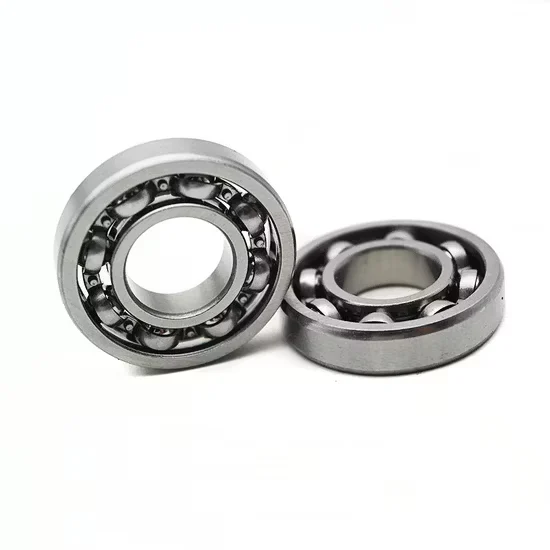
Deep Groove Ball Bearings
6204 Deep Groove Ball Bearing 20×47×14 mm
View Product
Deep Groove Ball Bearings
6003 Deep Groove Ball Bearing for Fan Equipment
View ProductKOYO stock in Greenville, factory orders for the rest
Common KOYO models ship from our North American warehouse; ultra-precision, custom and rare specifications are ordered direct from KOYO, with full export and customs documents.
Check Stock for Your Models- Stock orders dispatched
- 3 working days
- North America warehouse
- Greenville, SC
- Trade terms
- EXW · FOB · CIF · DAP
- Shipping
- Express · Air · Sea
Keep reading
Related KOYO bearing articles
Procurement & Trade FAQs · · 7 min read
JTEKT Bearing Import Supplier: Receiver Inspection and Recordkeeping
Protect your procurement from hidden transit damage and warranty rejections by conducting a rigorous JTEKT bearing import inspection upon delivery. Cross-check physical batch codes…
Read the Article
Procurement & Trade FAQs · · 8 min read
Why Dimension-Only RFQs Are Risky for JTEKT Bearing Substitutions
Sourcing JTEKT bearing substitutions using only dimensional data ignores critical internal clearances and cage materials, causing catastrophic thermal seizures and premature fragmentation under heavy…
Read the Article
Procurement & Trade FAQs · · 7 min read
JTEKT Reorder Controls Revision Lot Specification Wholesale
Master JTEKT reorder controls to prevent costly assembly mismatches and customs delays caused by unnoted revision suffixes and mixed lot numbers. Discover how strict…
Read the ArticleRequest a Quote
Send your KOYO model list for a consolidated quote
Part Number Company quotes KOYO bearings, seals, lubrication and tools in one proforma invoice, with multi-currency pricing and the documents your customs and QC teams need.
- JTEKT KOYO authorization letter
- KOYO original quality certificate
- Certificate of origin
- Customs, shipping documents and tracking