KOYO Bearing Insights Installation & Maintenance
How to Inspect Removed Bearings for Root-Cause Failure Clues
- Published
- By Part Number Company, Part Number Company
- Authorized KOYO Distributor

Most bearing failures are not manufacturing defects.
Systematic teardown and visual inspection of removed bearings reveal exact failure modes, preventing repeat downtime and guiding correct replacements. By identifying specific wear patterns such as spalling, smearing, or false brinelling, maintenance teams can pinpoint root causes like improper clearance, contamination, or vibration rather than blindly swapping parts.
I still remember the humid air inside a nickel smelter in Sulawesi. The maintenance manager was frustrated, holding a ruined spherical roller bearing that had failed prematurely. He insisted it was a quality issue from the supplier. I asked to see the housing and the installation records. When we pulled the inner ring apart, the raceway showed clear signs of spalling. But it wasn’t a material defect. The heat expansion during operation had closed up the internal clearance because they hadn’t accounted for thermal growth during mounting. Seeing the grease turned into black sludge right there on the shop floor changed how I approach these claims. Now, when I see a failure, I don’t just look at the part; I look at the story it tells through its wear patterns.
Understanding how to interpret these clues is critical for any MRO manager or engineer. It turns a reactive replacement into a proactive solution. This guide walks you through the practical steps of inspecting removed bearings to find the real reason behind the breakdown.
How Should You Prepare a Removed Bearing for Inspection?
Clean carefully without altering wear tracks.
Before you can diagnose anything, you need a clean canvas. However, aggressive cleaning can destroy the very evidence you are looking for. The goal is to remove loose debris and old lubricant while preserving the surface integrity of the raceways and rolling elements.
Start by wiping away excess grease with a lint-free cloth. Avoid using high-pressure air jets directly on the rolling elements, as this can force contaminants deeper into the cage or damage the surface finish. Instead, use a mild solvent that evaporates quickly and leaves no residue. Kerosene or specialized bearing cleaning fluids are often suitable, but always check compatibility with any seals or cages that might still be attached.
If the bearing is heavily contaminated, soak it briefly rather than scrubbing. Scrubbing with abrasive pads can create artificial scratches that mimic fatigue spalling, leading to incorrect conclusions. Once cleaned, dry the bearing immediately to prevent flash rusting, which can obscure fine details. Use compressed air cautiously, directing the flow parallel to the raceways rather than perpendicular to them.
Keep the bearing in a clean, dry environment during inspection. Even a small amount of dust from the workshop floor can interfere* a clean tray to catch any particles that fall out during the process. These particles can sometimes provide additional clues about the type of contamination involved, such as metal shavings from gear wear or sand from external ingress.
What Do Different Raceway Wear Patterns Indicate?
Match spalling, brinelling, or smearing to specific root causes.
The raceway is the primary load-carrying surface, and its condition tells the most significant part of the story. Different types of damage point to distinct operational issues. Recognizing these patterns is the core of effective bearing failure analysis.
Spalling appears as flakes or chunks missing from the raceway or rolling elements. It is often mistaken for poor material quality, but in many cases, it results from improper installation clearance or excessive load. If the spalling is concentrated in one area, check for misalignment or shaft deflection. If it is distributed evenly, consider overloading or insufficient lubrication film thickness.
False brinelling looks like small, shallow depressions spaced evenly along the raceway. This typically occurs when a bearing is stationary but subjected to vibration, such as during transport or when adjacent machinery is running. The rolling elements vibrate against the raceway, causing localized fatigue without rotation. This is common in standby equipment like conveyor systems that sit idle for extended periods while nearby crushers operate.
Smearing or adhesive wear presents as shiny, polished areas or material transfer between surfaces. This indicates sliding motion where rolling should occur, often due to insufficient preload, rapid acceleration, or inadequate lubrication viscosity. In high-speed applications, smearing can escalate quickly, generating heat that further degrades the lubricant and damages the steel.
| Wear Pattern | Visual Appearance | Likely Root Cause |
|---|---|---|
| Spalling | Flakes or pits on raceway/rollers | Improper clearance, overloading, fatigue |
| False Brinelling | Evenly spaced shallow dents | Vibration during standby, transport damage |
| Smearing | Shiny, polished streaks | Sliding motion, low viscosity, rapid start-up |
| Abrasive Wear | Fine scratches, dull finish | Contamination, poor sealing, dirty lubricant |
By matching the visual evidence to these categories, you can narrow down the potential causes significantly. This prevents the common mistake of replacing a bearing only to have it fail again for the same underlying reason.
How to Analyze Lubricant and Cage Conditions?
Check sludge and cage wear for contamination or misalignment clues.
The lubricant and cage are often overlooked, yet they provide vital context for the bearing’s operating environment. The condition of the grease or oil can reveal issues that the metal surfaces alone might not show.
If the lubricant has turned into a black, sticky sludge, it usually indicates severe oxidation or contamination. Many engineers blame the lubricant quality immediately, but more often, it is external contamination entering through failed seals. Check for particles in the grease. Metallic particles suggest internal wear, while silica or dirt points to seal failure. In mining environments, fine dust can bypass inadequate sealing arrangements, mixing with the grease and forming an abrasive paste that accelerates wear.
The cage condition also offers insights. A polished or worn cage pocket suggests misalignment or excessive vibration. If the cage is cracked or broken, it may indicate high speeds beyond the design limit, sudden stops, or inadequate lubrication leading to friction heat. Plastic cages can deform under high temperatures, so check for discoloration or melting signs.
In one case involving a mining crusher, we found the grease had completely separated, leaving a hard, varnish-like deposit on the rollers. The seal had failed, allowing water and fine ore dust to enter. The resulting mixture lost its lubricating properties, leading to rapid overheating and seizure. Identifying the seal failure was key to preventing recurrence, not just changing the grease type.
What Installation Errors Cause These Failures?
Link findings to thermal clearance and alignment mistakes.
Many failures originate before the machine even starts. Installation errors are a leading cause of premature bearing damage, yet they are often invisible until teardown. Understanding how installation affects performance is crucial for accurate bearing failure analysis.
Thermal expansion is a frequent culprit, especially in high-temperature applications like steel mills or smelters. If the internal clearance is not adjusted for operating temperature, the bearing can become preloaded excessively as it heats up. This leads to increased friction, heat generation, and eventually spalling. Using a C3 or C4 clearance class might be necessary depending on the temperature differential between mounting and operation.
Misalignment during mounting can cause edge loading, where the load concentrates on one side of the raceway. This creates uneven stress distribution, leading to premature fatigue. Check the housing and shaft for fit tolerances. A loose fit can allow the outer ring to creep, causing fretting corrosion, while a tight fit can distort the ring, reducing internal clearance.
When we supply genuine bearings from brands like SKF, FAG, or TIMKEN, we often provide technical selection support to ensure the correct specs are chosen for the specific application. This helps avoid repeat failures caused by mismatched components. For example, selecting a spherical roller bearing with appropriate misalignment capability can compensate for minor shaft deflections in heavy machinery.
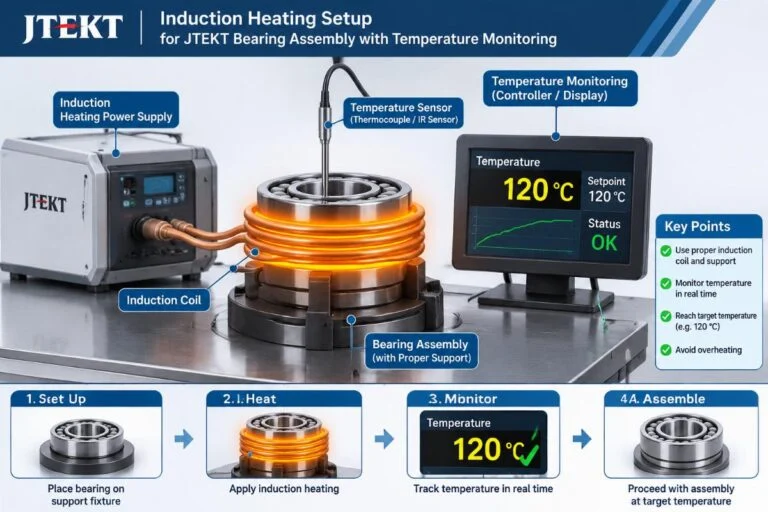
Always verify the mounting procedure. Use induction heaters for large bearings to ensure uniform expansion, avoiding hammer strikes that can damage the raceway. Check alignment with precision tools after mounting. These steps, though simple, are often skipped in urgent maintenance scenarios, leading to costly downtime later.
Conclusion
Inspecting removed bearings is about reading the evidence, not just replacing parts.
By systematically analyzing wear patterns, lubricant condition, and installation history, you can identify the true root cause of failure. This approach transforms maintenance from a reactive cost center into a strategic advantage, ensuring longer service life and reduced unplanned downtime. Accurate bearing failure analysis saves time, money, and operational stress.
Target Industries
Industries and equipment where the KOYO products in this article are specified.

Written by the Part Number Company team
Part Number Company is an authorized KOYO distributor supplying JTEKT KOYO bearings, seals, lubrication, tools and condition monitoring parts from North American stock in Greenville, SC, plus KOYO factory orders for rare and custom specifications.
About Part Number Company and our KOYO authorizationProducts in this article
KOYO bearings mentioned above
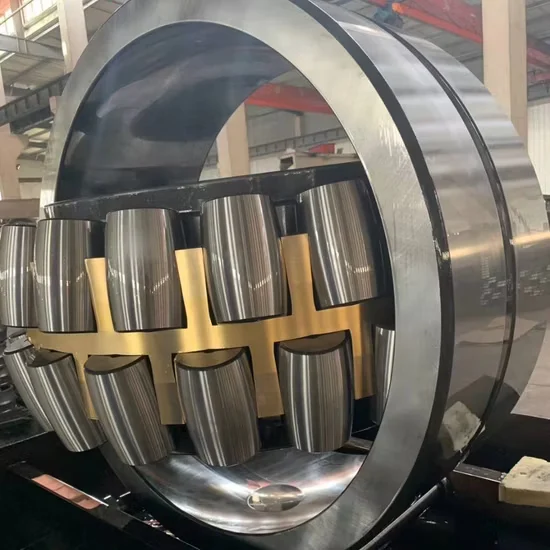
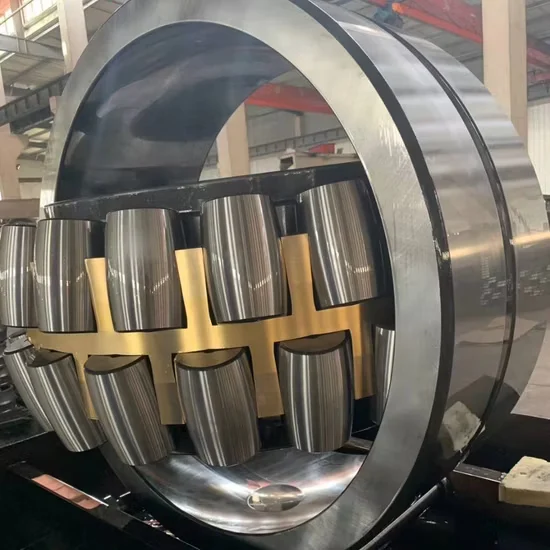
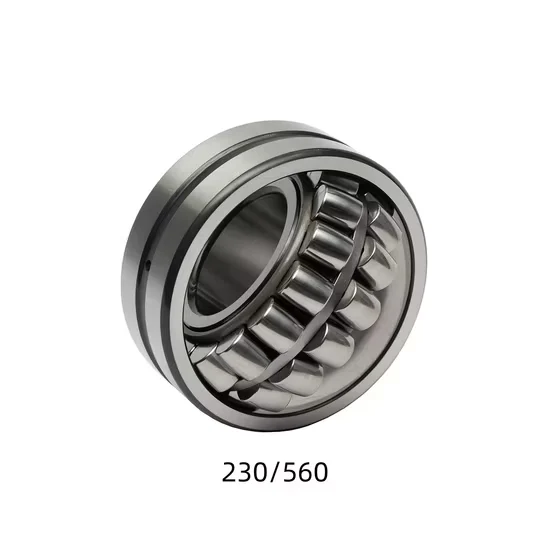
The KOYO models discussed here are available from Part Number Company, either from Greenville stock or by KOYO factory order.
KOYO stock in Greenville, factory orders for the rest
Common KOYO models ship from our North American warehouse; ultra-precision, custom and rare specifications are ordered direct from KOYO, with full export and customs documents.
Check Stock for Your Models- Stock orders dispatched
- 3 working days
- North America warehouse
- Greenville, SC
- Trade terms
- EXW · FOB · CIF · DAP
- Shipping
- Express · Air · Sea
Keep reading
Related KOYO bearing articles
Installation & Maintenance · · 8 min read
Wholesale JTEKT Bearing Assemblies: Temperature, Noise and Vibration
Properly handling the commissioning JTEKT bearing assemblies process prevents premature seizure caused by installation errors rather than manufacturing defects. Controlling initial run-in temperature, identifying…
Read the Article
Installation & Maintenance · · 7 min read
JTEKT Bearings for Standby Equipment Vibration Control Bulk Supplier
Master JTEKT bearings vibration damage control by correcting installation clearance and enforcing strict humidity control to eliminate startup spikes caused by micro-deformation. Discover proven…
Read the Article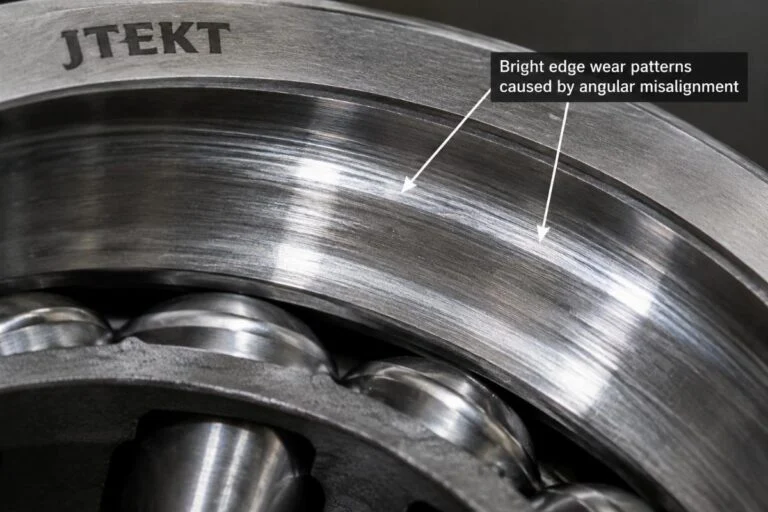
Installation & Maintenance · · 6 min read
Wholesale JTEKT Bearing Assemblies: Misalignment-Induced Loads
Execute precise JTEKT bearing misalignment diagnosis to prevent premature failures caused by sub-millimeter base unevenness and shaft deviation. Discover step-by-step installation checks for soft…
Read the ArticleRequest a Quote
Send your KOYO model list for a consolidated quote
Part Number Company quotes KOYO bearings, seals, lubrication and tools in one proforma invoice, with multi-currency pricing and the documents your customs and QC teams need.
- JTEKT KOYO authorization letter
- KOYO original quality certificate
- Certificate of origin
- Customs, shipping documents and tracking